



Where to See Flamingos in Turks and Caicos
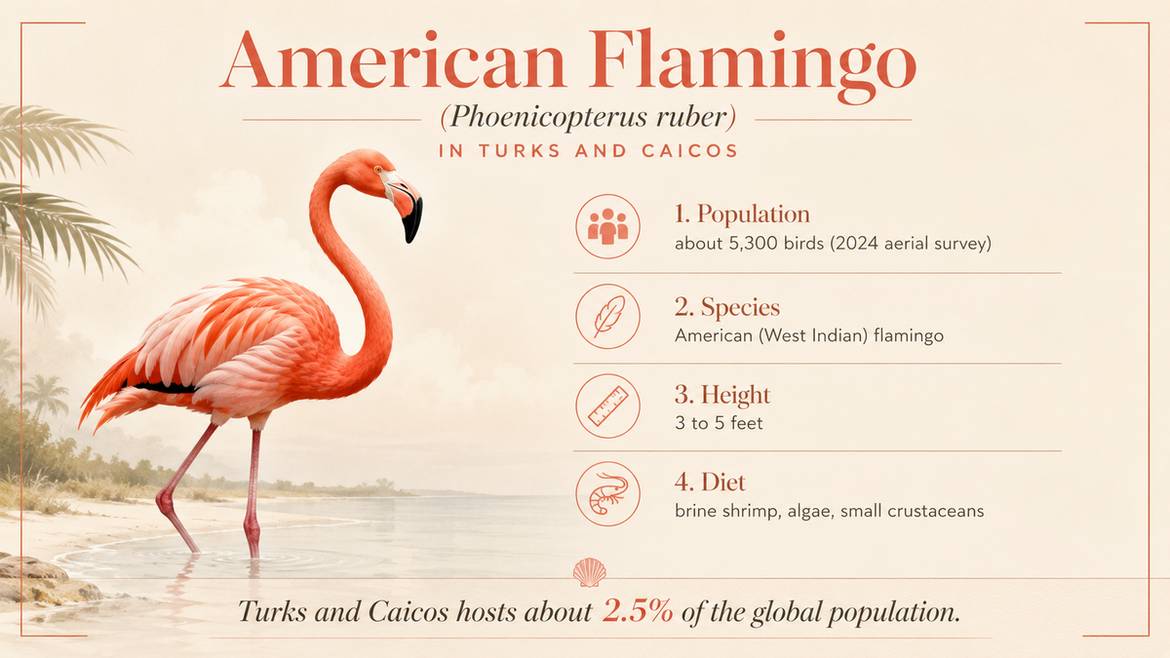
When guests ask us what surprised them most about the islands, they almost never say the water. They say the flamingos. About 5,300 wild American flamingos live across the archipelago (roughly 2.5% of the global population), and yet most first-time visitors do not even know they are here. We have been hosting travelers at White Villas since 2016, and helping guests plan a flamingo morning has quietly become one of our favorite parts of the job.
This guide is the version of that conversation we wish we could hand every guest. It covers where the birds actually gather (island by island), when to go, what to bring, and how to plan a half-day or full-day outing around a sighting rather than hoping for a lucky glimpse from the car.
Meet the American Flamingo of Turks and Caicos
Only one species of flamingo lives here: the American flamingo, also called the West Indian or Caribbean flamingo (Phoenicopterus ruber). It is the only flamingo native to North America. Adults stand three to five feet tall, filter-feed on brine shrimp, algae, and tiny crustaceans, and get their famous pink from those same crustaceans and algal pigments.
The Turks and Caicos population is largely resident, not migratory, and a 2024 country-wide aerial survey conducted by researchers with the Turks and Caicos National Trust counted approximately 5,303 birds. More than half of them use a single wetland: Flamingo Pond on North Caicos, inside the Pumpkin Bluff Pond Nature Reserve. The rest are spread across ponds, salinas, and coastal wetlands on Providenciales, Middle Caicos, South Caicos, Grand Turk, and Salt Cay.
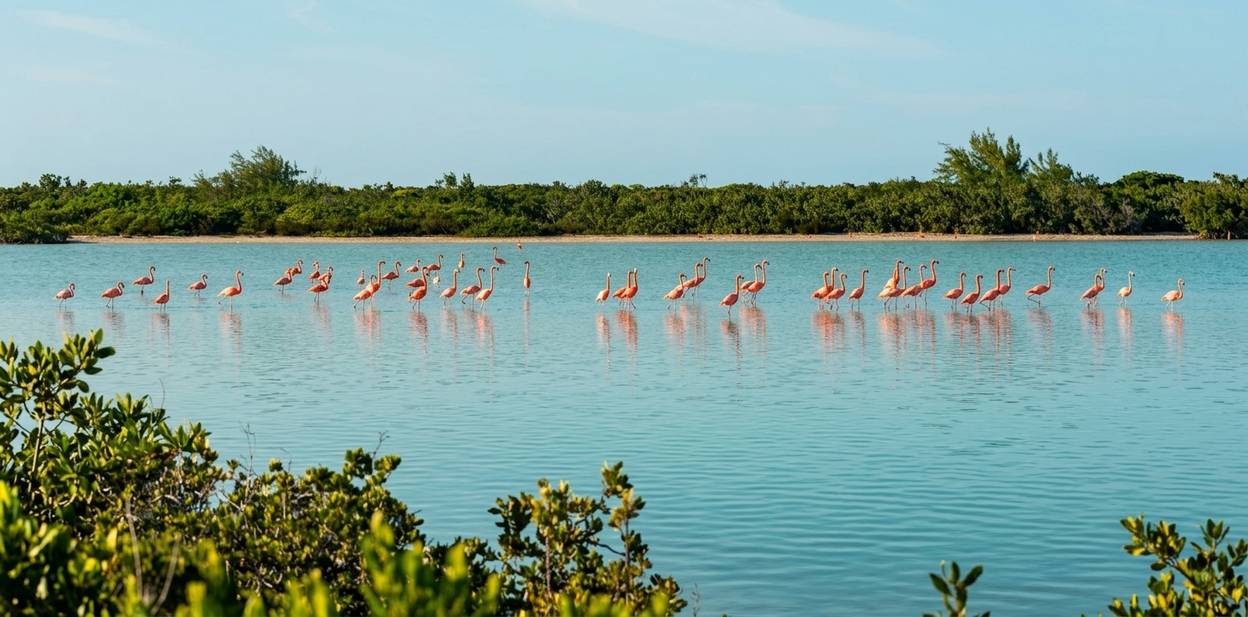
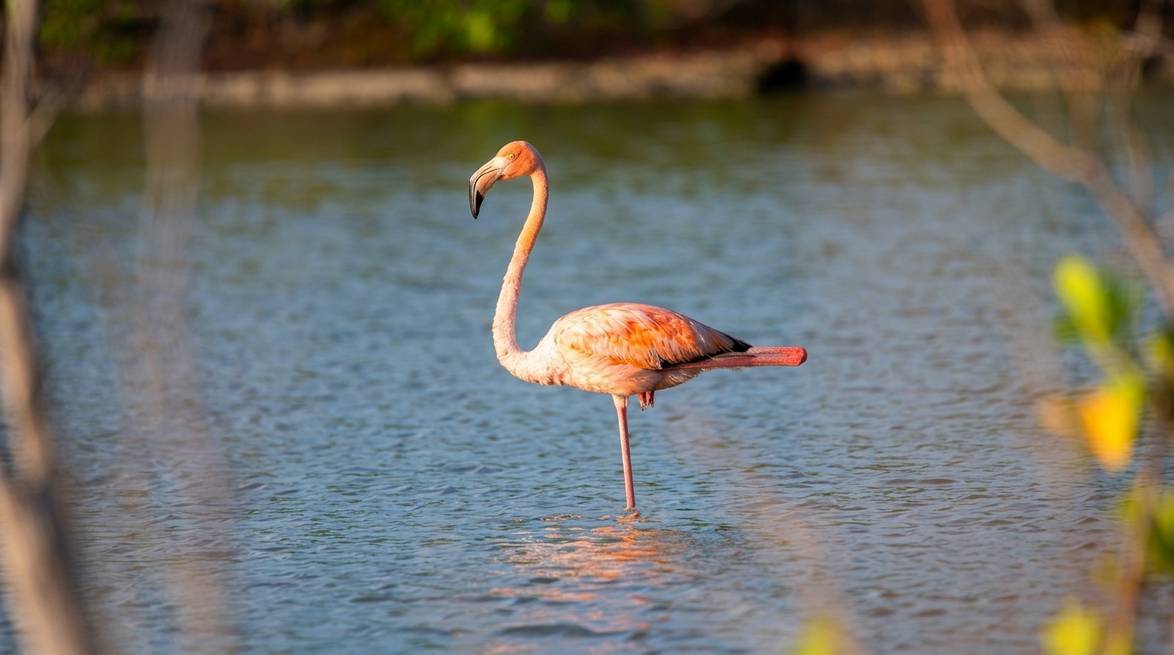
Two things surprise most guests. First, breeding within Turks and Caicos has not been confirmed; the birds appear to commute to colonies elsewhere in the Caribbean to nest. Second, they are shy. Almost every viewing spot puts you 200 to 400 meters from the flock. That is not a design flaw, it is the reason they keep coming back, and it is why binoculars matter far more than a long lens on a phone.
Where to See Flamingos on Providenciales
If you are staying on Provo (as most of our guests are), you do not need a ferry or a puddle-jumper to see flamingos. You need patience, a rental car, and an early alarm. Sightings on Provo are smaller and less predictable than on North Caicos, usually singles or groups of five to fifty, but four spots deliver reliably enough to build a morning around.
Pigeon Pond and Frenchman’s Creek Nature Reserve
This is Provo’s best-known flamingo habitat: a protected saline lagoon and mudflat system on the undeveloped southwest side of the island, reached via a rough track off the Chalk Sound and West Harbour Bluff road. The larger reserve system (Pigeon Pond and Frenchman’s Creek, together with Proggin’ Bay) covers thousands of acres of mangrove and shallow water and is on the Ramsar list of internationally important wetlands.
- Best time: Early morning, ideally sunrise to 9:00, in the dry season (November to April)
- Typical flock: Ten to fifty birds at Proggin’ Bay on a good day, scattered singles elsewhere
- Access: 4×4 recommended, closed shoes required, no facilities on site
- Gear: 8x or 10x binoculars are essential; distances of 200 to 400 meters are normal
- Etiquette: Do not walk out onto mudflats or into mangroves; view from the pond edge
Royal Turks and Caicos Golf Club Ponds
The artificial water hazards at the golf club, a five-minute drive inland from Grace Bay, quietly attract a handful of flamingos most of the year, along with egrets, herons, and ducks. It is the easiest sighting on Provo if you already have a tee time. Non-golfers should check in at the pro shop first; access is sometimes granted, sometimes not, depending on play.
- Rating: 4.8 stars (161 Google reviews)
- Address: Grace Bay Rd, Grace Bay, Providenciales
- What one recent guest said: “Course was in great shape… You can order food from your cart and they will bring it out to you.”
- Best time: Early morning tee times or a mid-afternoon lull
- Numbers: Usually a handful of birds, not a flock
Cheshire Hall Plantation and Cheshire Hall Creek
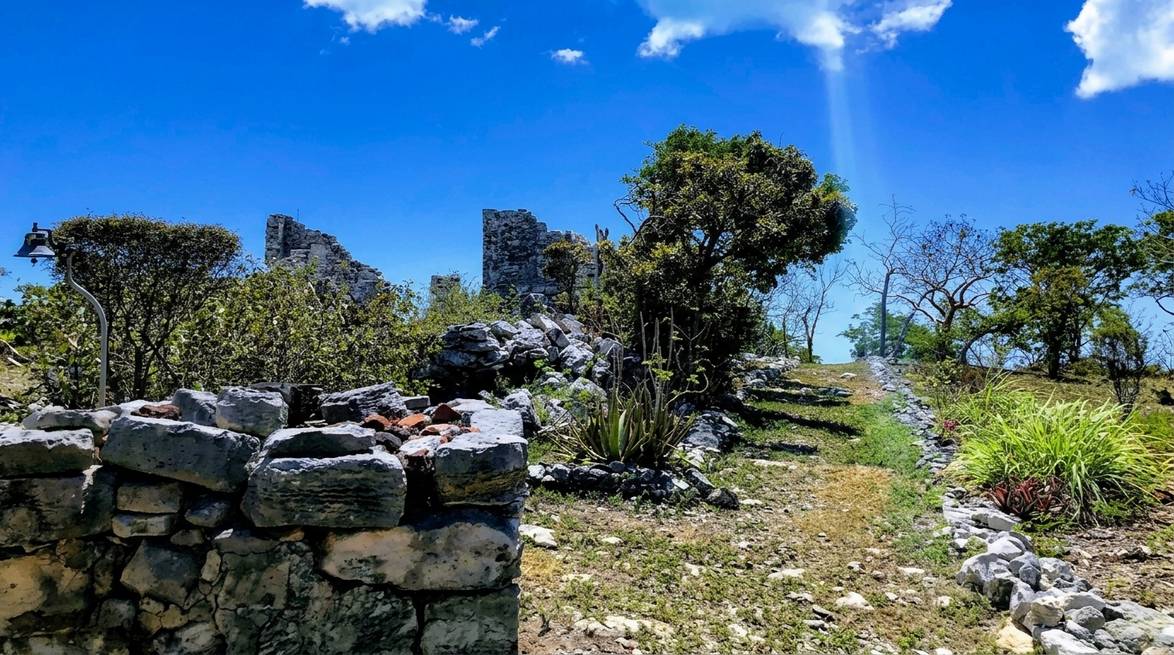
The historic ruins at Cheshire Hall Plantation are worth an hour on their own, and the adjacent mangrove creek is a good, low-effort spot to scan for wading birds. Flamingos are occasional visitors here rather than a sure bet, but the plantation tour pairs nicely with a slow walk to the creek edge afterward. Mid-tide mornings and evenings are the best windows.
- Rating: 4.1 stars (95 Google reviews)
- Address: Providenciales, TKCA 1ZZ
- What visitors say: “An awesome experience to visit and be present where there are authentic ruins, rooms, gardens.”
- Bring cash for the tour if you pay on site
- Pair it with: The Bight Park just up the road for a mid-morning break
The Bight Park
The Bight is not a flamingo site itself, but it is the practical anchor for a Provo birding morning. A quiet beach, a small shaded park, an easy walk to the reef line, and just enough facilities to reset between stops at Pigeon Pond, the golf course, and Cheshire Hall Creek. Local guides often meet clients here before heading to the ponds.
- Rating: 4.5 stars (453 Google reviews)
- Address: Lower Bight Rd, The Bight Settlement
- What visitors say: “Great beach. Not as crowded as others. Small park leads to beach. Has a small shower.”
- Good for: Regrouping between flamingo stops, a snack break, a quick swim
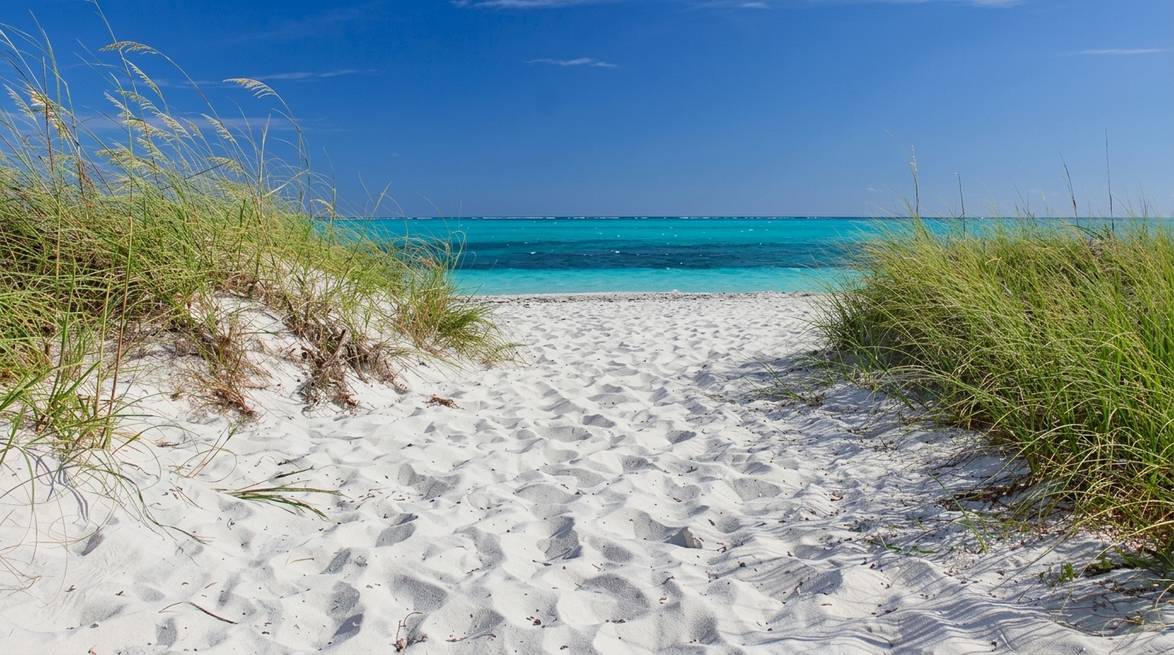
The Flamingo Heartland: North Caicos and Middle Caicos
If you have a full day and you are serious about seeing hundreds of flamingos in one place, take the ferry from Walkin Marina in Leeward to Sandy Point on North Caicos. It leaves early, runs about 25 minutes, and drops you into an island that feels like Provo did twenty years ago. A rental car (or a pre-booked guide with vehicle) waits on the North Caicos side.
Flamingo Pond Overlook, North Caicos
This is the single most important flamingo site in the country. Flamingo Pond (formally the Pumpkin Bluff Pond Nature Reserve) supports over half of the national population, and on a good day flocks in the hundreds and occasionally thousands feed on the shallow saline flats. There is a small viewing platform and gift hut where you can rent binoculars for a couple of dollars if you forgot yours.
- Rating: 3.5 stars (68 Google reviews)
- Address: Whitby, North Caicos
- Category: Scenic spot
- What honest recent visitors report: “Gift shop with viewing platform for flamingos. We saw a few in the distance so binoculars or powerful zoom lens is needed.” And: “You can rent them for 2 dollars but we drove straight to the overlook from the marina and so had no idea where to buy them.”
- Best time: Early morning (October to March holds the largest flocks)
- Bring: 8x or 10x binoculars, water, sun cover; there is no shade at the platform
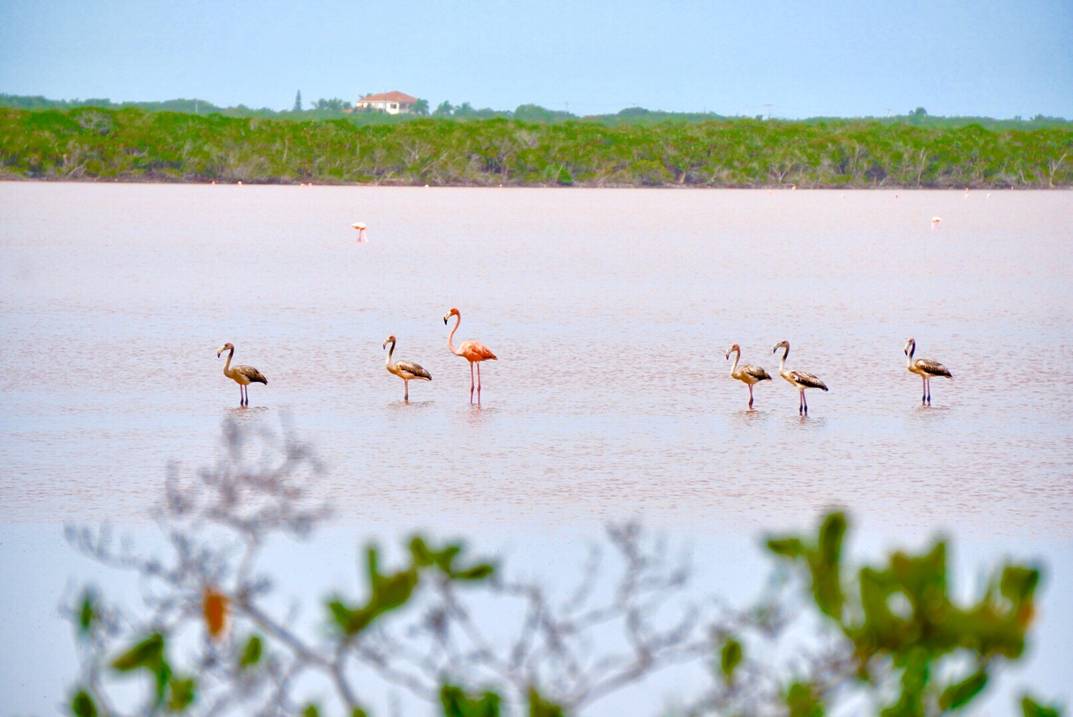
The reviews are worth reading honestly before you go. The birds are far away, the platform is low, and if you show up at midday with only a phone camera you will be disappointed. If you show up at sunrise with binoculars and a bit of patience, this is one of the great wildlife stops in the Caribbean.
Wade’s Green Plantation and the Rest of North Caicos
While you are on the island, the ruins at Wade’s Green Plantation (a preserved loyalist-era cotton plantation near Kew) make a natural pairing with Flamingo Pond. Access can be limited during maintenance periods, so call ahead through the Turks and Caicos National Trust before you cross on the ferry. If Wade’s Green is closed the day you visit, Cottage Pond, Mudjin Harbour on Middle Caicos, and the Conch Bar Caves are all within a comfortable drive.
Salinas Country: South Caicos and Salt Cay
The southern islands are where flamingos and human history overlap most clearly. From the 1600s until the mid-twentieth century, Turks and Caicos was a salt-producing colony, and the shallow evaporation ponds (salinas) that once fed the industry are now some of the most productive flamingo habitat in the region.
South Caicos
South Caicos is a small fishing island reached by a short flight from Providenciales. The central salinas that run through the middle of Cockburn Harbour attract flamingos year-round, and the surrounding reefs and Belle Sound are protected as nature reserves. It is a full-day trip at minimum, or better a one-night stay for early-morning viewing.
- Rating: 4.6 stars (36 Google reviews)
- What one visitor wrote: “South Caicos is one of the eight main islands… home to three national parks and reserves and offers spectacular reefs for snorkeling and diving.”
- Access: InterCaribbean and Caicos Express run short flights from Provo
- Pair it with: Reef snorkeling in the Admiral Cockburn Land and Sea National Park
Salt Cay
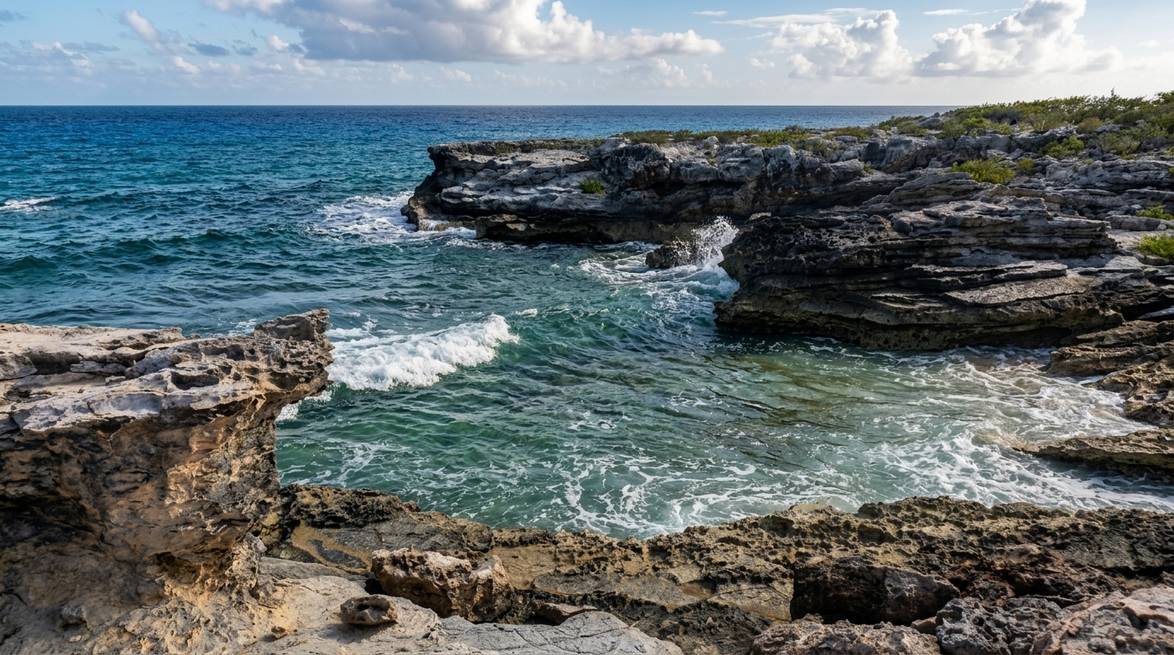
Salt Cay is a two-and-a-half square mile island south of Grand Turk with a permanent population under a hundred and a landscape that is essentially one big historic salina. Flamingos are less numerous here than at Flamingo Pond, but the setting (crumbling salt houses, windmills, donkeys wandering the salt roads) is unlike anywhere else in the country. In January through April, the same trip doubles as one of the best land-based humpback whale watching windows in the Caribbean.
- Rating: 4.9 stars (13 Google reviews)
- What visitors say: “Salt Cay is a perfect place to take a step back from the hectic world and enjoy the amazing beaches, friendly locals. Fabulous diving. Annual whale watching.”
- Access: Short flight to Grand Turk plus a small charter flight or boat to Salt Cay
- Best paired with: Grand Turk town salinas (the ponds around Cockburn Town also draw flamingos and other waders)
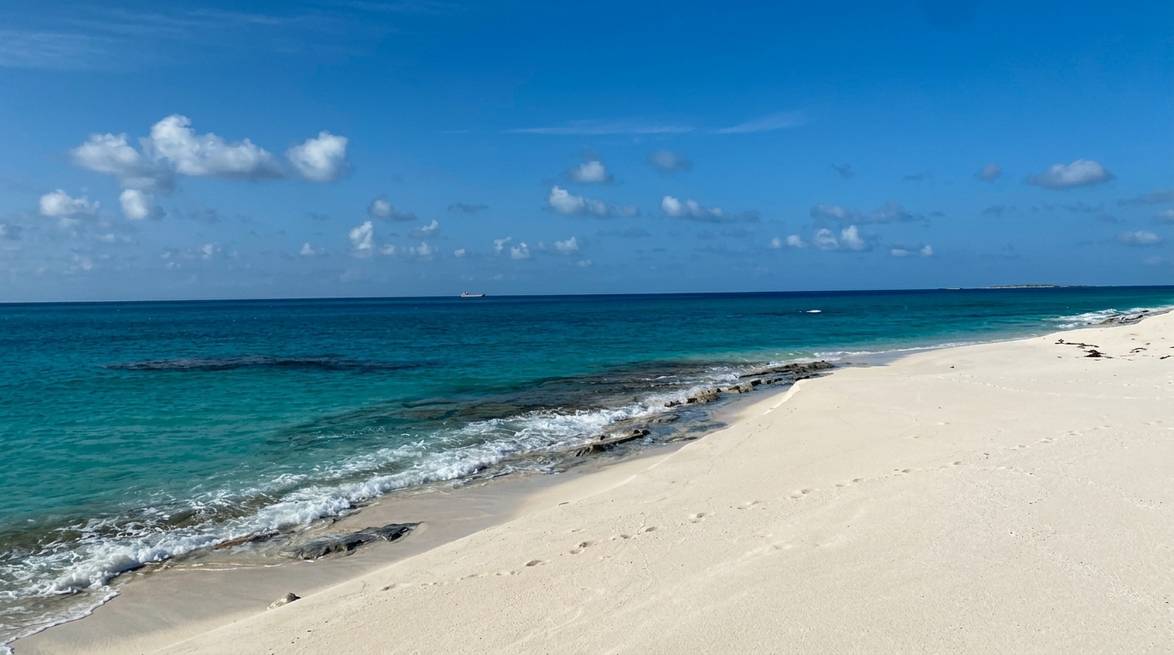
A Stop That Puts It All in Context
Before you head out to any of these sites, an hour at the Turks and Caicos National Museum’s Providenciales branch in Grace Bay ties the flamingo story to the salt story. The volunteer guides are excellent, entry is inexpensive, and the exhibits explain why so many of the country’s most important bird habitats sit inside former industrial ponds.
- Rating: 4.4 stars (49 Google reviews)
- What one visitor wrote: “A great way to support TCI heritage and do something a bit different on your holiday. Plan to spend about 30 to 45 minutes here, entry costs 5 dollars and includes an informative tour by local volunteers.”
- Best paired with: A stroll through Grace Bay before or after
When to Go, What to Bring, and How to Behave
The good news: flamingos are here year-round. The better news: the months that make Turks and Caicos most comfortable for people are also the months that make flamingo watching most reliable.
- February to April: The sweet spot. Dry, warm, calm winds, good light, and October through March flocks are still holding at Flamingo Pond.
- December to January: Excellent conditions but peak prices and busier ferries.
- Late April to May and November: Shoulder value. Slightly warmer, fewer crowds, still very workable.
- August to October: Hurricane season. Flamingos are still here, but weather disruption is more likely.
Time of day matters more than most guests realize. Aim to be on site at sunrise or within two hours after, or in the last two hours before sunset. Midday produces heat shimmer over the ponds and washed-out photos.
What to pack for a flamingo morning:
- 8x or 10x binoculars (non-negotiable)
- Sun hat, long-sleeve UPF layer, and reef-safe sunscreen
- Closed-toe shoes with grip (limestone edges are sharp)
- At least a liter of water per person
- A phone or camera with a real optical zoom if you want usable photos
Etiquette: Stay behind fences and platforms. Do not walk into mudflats or mangroves. Do not clap, whistle, or throw anything to make the birds move. The distance between you and the flock is what keeps the flock returning.
Where to Stay for the Best Flamingo Access
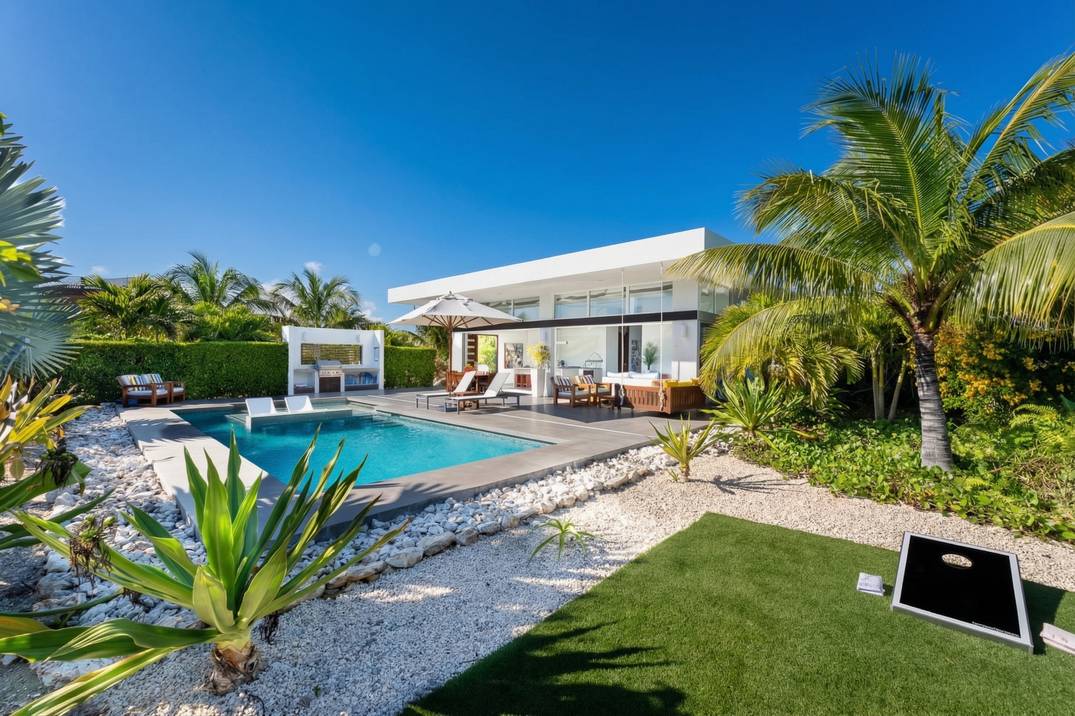
Most of our guests use White Villas as a base for a mix of beach mornings and off-Provo adventures. The villas sit on Long Bay Beach on the quieter east end of Providenciales, about 20 minutes from Walkin Marina (for the North Caicos ferry) and 25 minutes from the airport (for the InterCaribbean flights to South Caicos and Grand Turk). That geography makes early-morning flamingo runs practical instead of aspirational.
- Couples and photographers usually pick our smaller two-bedroom villas for the quieter mornings.
- Families and multigenerational groups spread out into the four-bedroom villas with private pools and room for gear.
- Guests who want everything handled (transfers, private chef, birding guide, ferry tickets) tend to book on our all-inclusive villa plan.
- If you would rather not think about logistics at all, our reservations manager Tim can put together a custom family vacation that folds a North Caicos flamingo day into your week.
For a broader look at what a week here can include beyond the birds, our Turks and Caicos experience page walks through the reefs, restaurants, and quieter beaches around Long Bay.
Plan Your Flamingo Morning
Wild flamingos are one of the quietest luxuries the islands offer. No entrance fee, no crowd, no schedule beyond the sunrise. Bring binoculars, choose your island, and give the birds the distance they need.
If you would like help lining up a North Caicos ferry morning, a South Caicos day trip, or simply a villa on Long Bay Beach that puts you close to the ponds, see our full collection at White Villas or get in touch with our team and Tim will build the morning around your stay.
Frequently Asked Questions
Are there really wild flamingos in Turks and Caicos, or are they in a zoo?
They are entirely wild. A 2024 aerial survey counted approximately 5,300 American flamingos across the archipelago, and none of them are captive. The main gathering sites are inside protected nature reserves rather than parks.
Where is the single best place to see flamingos in Turks and Caicos?
Flamingo Pond Overlook on North Caicos, hands down. It holds over 50% of the country’s flamingo population, and on peak days flocks reach into the hundreds and sometimes thousands.
Can I see flamingos on Providenciales without taking a ferry?
Yes. Pigeon Pond and Frenchman’s Creek Nature Reserve, the ponds at the Royal Turks and Caicos Golf Club, and the wetlands around Cheshire Hall Creek all get regular flamingo visitors. Numbers are smaller than on North Caicos, usually singles or groups of five to fifty.
What time of day should I go?
Sunrise to about 9:00, or the last two hours before sunset. Flamingos feed most actively in cooler hours, and the softer light makes the pink much easier to spot at 200-plus meters.
Do I need binoculars?
Yes. This is the single most common mistake first-time visitors make. Every honest Google review of Flamingo Pond mentions it. Even a good phone zoom shows the birds as pink dots. 8x or 10x binoculars turn dots into flamingos.
Is there a best month for flamingo watching?
Any dry-season month works. February through April is the widely recommended sweet spot for weather. October through March holds the biggest flocks at Flamingo Pond on North Caicos.
Can I book a guided flamingo tour?
Yes. Local birding guides and the Turks and Caicos National Trust can arrange private outings, and our reservations manager Tim is happy to coordinate one as part of your stay.