


The Best Caribbean Island to Visit in January (Warmest Islands Compared)
January is when the Caribbean earns its reputation. The rainy season is behind most islands, the trade winds blow steady, and the gap between a gray week at home and a warm week on the water has never felt bigger. The hard part is choosing where to go, because every island looks perfect in photos.
We are Simon, Pina and Karim, with Tim, our reservations manager, and we run White Villas, a collection of private villas about 500 feet from Long Bay Beach in Providenciales. Before we built our first villa in 2016, we visited more than 15 Caribbean destinations looking for the one place we wanted to live. So when guests ask us for the best Caribbean island to visit in January, we answer the way we would for a friend: with real numbers, honest trade-offs and the island we chose for ourselves.
Our pick comes first: Turks and Caicos, and the villas we still have open for a January week. Then we show how six other favorite islands compare on what actually decides a January trip: air and sea temperature, rainfall, wind, nonstop flights from the East Coast, crowds and beaches. Climate figures come from each island’s national meteorological service or from the 1991 to 2020 climate normals that NOAA publishes. Flight details come from airport schedules, tourism boards and airlines.
What Is the Best Caribbean Island to Visit in January?
Turks and Caicos is our answer for January: calm, shallow, clear water, steady trade winds and nonstop flights of under four hours from New York. If pure heat matters most, Aruba is the warmest island we compared, averaging about 86.5°F (30.3°C), with Curaçao a near tie. January averages for the other islands:
- Aruba: average high 86.5°F (30.3°C), daily mean 80.6°F (27.0°C), 1.7 inches of rain.
- Curaçao: average high 85.8°F (29.9°C), daily mean 79.9°F (26.6°C), 1.8 inches of rain.
- Barbados: average high 84.4°F (29.1°C), daily mean 78.8°F (26.0°C), 2.4 inches of rain.
- Grand Cayman: average high 83.1°F (28.4°C), 2.2 inches of rain and the fewest rainy days, about 5.
- San Juan, Puerto Rico: average high 83.2°F (28.4°C), daily mean 77.6°F (25.3°C), 4.1 inches of rain.
- Antigua: average high 82.8°F (28.2°C), daily mean 77.7°F (25.4°C), 2.2 inches of rain.
- Keep in mind: the warmest island is not always the best one for you. Water, wind, flight time, crowds and the kind of beach you want matter just as much.
Our Pick for January: Turks and Caicos, From Long Bay
Aruba and Curaçao win on pure heat, and we compare them below. But if you ask us where to spend a January week, we will always say Turks and Caicos, and we chose it after seeing the rest. Here is why, from our own beach.
Why Long Bay Works So Well in January
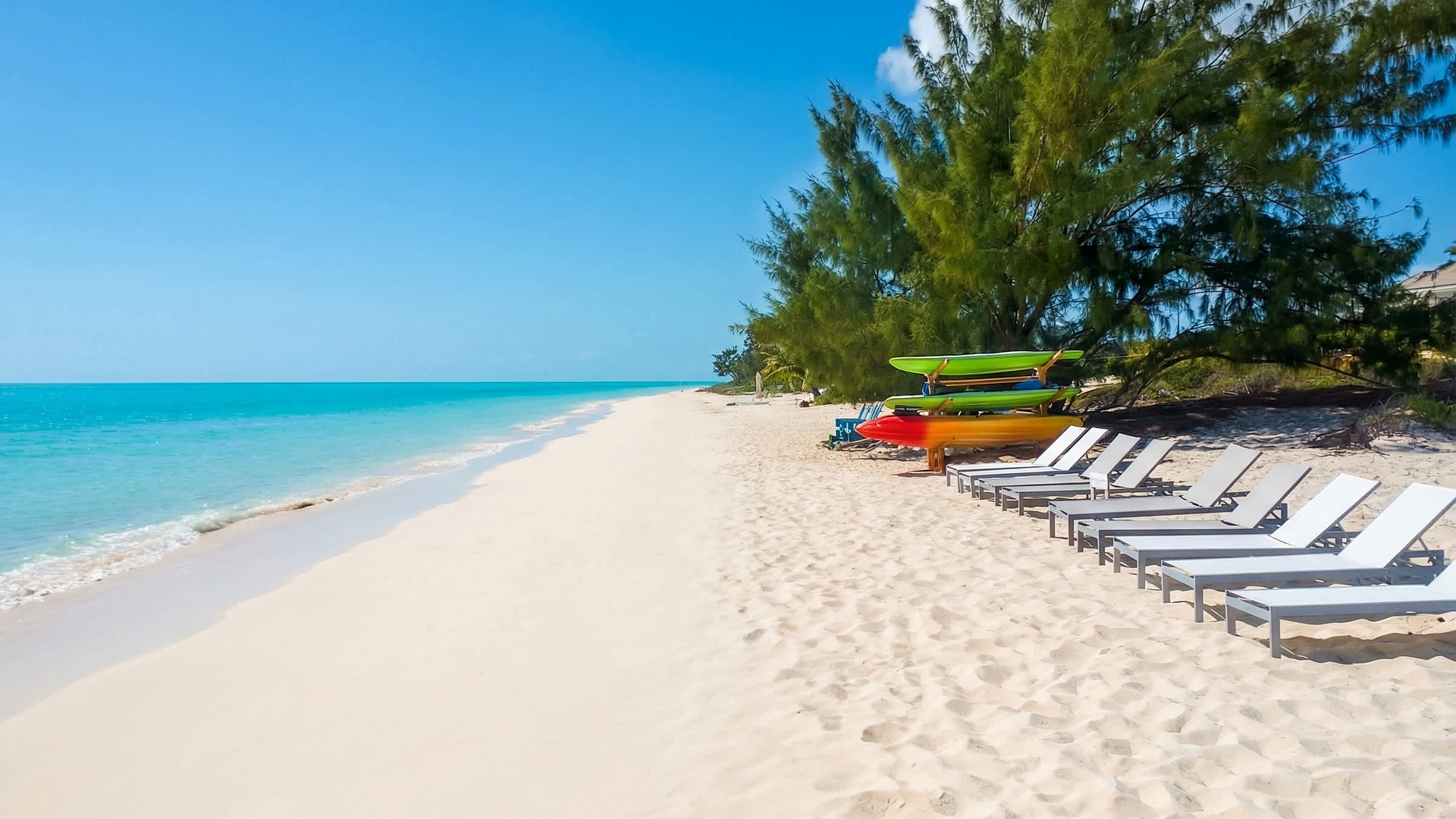
Long Bay Beach stretches for more than three miles on Providenciales, about a three-minute walk from our villas. Its water is calm, and the shallows run far from shore, so at low tide you can wade out a very long way in clear turquoise water. On a bright January morning, it is our favorite place to walk.
The same trade winds that keep January comfortable make Long Bay one of the island’s favorite kiteboarding beaches. If you have always wanted to try it, the flat, shallow water is a forgiving place to learn, and lessons and rentals are easy to find on the beach. If you would rather just float, there are loungers, kayaks and paddleboards waiting for our guests on the sand.
January has other reasons, too. Grace Bay, one of the most celebrated beaches in the world, is about five minutes away by car for snorkeling and dinner. And January to March is humpback whale season around Grand Turk and Salt Cay; our whale watching day trip guide explains how to go.
- January weather: warm, sunny and breezy, a little cooler than Aruba or Curaçao; our Turks and Caicos weather by month guide has the numbers.
- Flights: under four hours nonstop from the New York area, as our New York to Turks and Caicos guide explains. This winter also adds new seasonal nonstops, such as a weekly flight from Baltimore from December 24, according to BWI Airport.
- Crowds: Grace Bay is the busy side in high season; Long Bay feels uncrowded thanks to its size.
- The water: shallow, calm and clear, which is why we rank it first in our clearest water in the Caribbean guide.
- The stay: private villas with their own pool, kitchen and terrace, about 500 feet from the sand and 20 minutes from the airport.
- Best for: families, couples, kiteboarders and anyone who wants calm turquoise water with room to spread out.
Three of Our Villas Still Open in January 2027
If Turks and Caicos is your pick, the next decision is the villa. Our guide on where to stay in Turks and Caicos covers the island’s areas, and our roundup of villas with a private pool compares every pool layout. Here, we keep it simple: three villas that still had full January weeks open when we checked our booking calendar in late November. January fills quickly, so these dates can change.
Villa 11: A Mid-January Week for Two Families
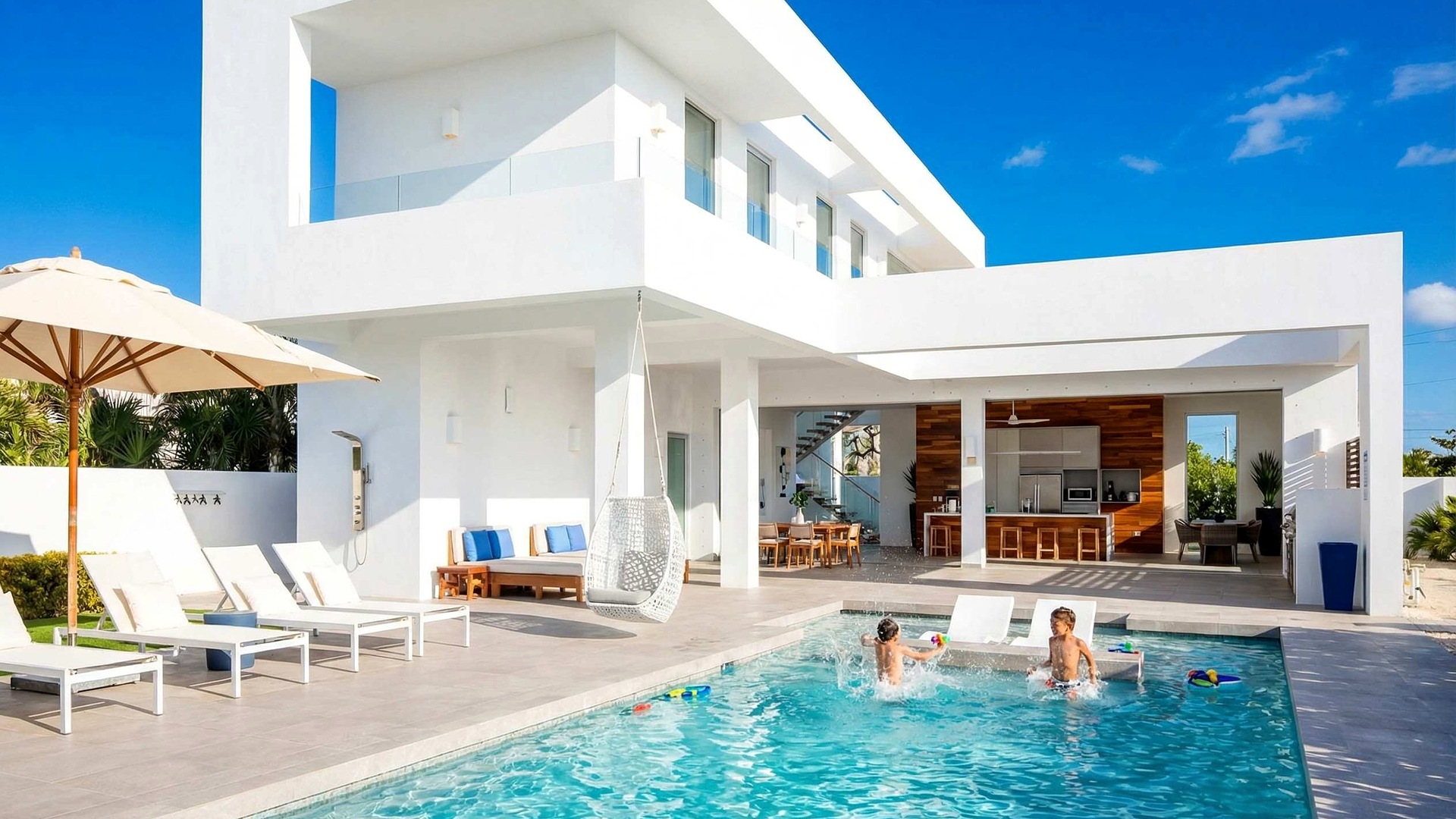
Villa 11 is a three-bedroom villa with two bedrooms in the main house and a third in a large pool annex, which gives a second couple or the kids their own space across the pool. It sleeps up to eight (six adults and two children), and the listing notes sea and water views.
It is the one we would suggest for the first half of January, when crowds thin after New Year’s. Spend the morning on Long Bay, bring the kids back for an afternoon in the pool, then light up the outdoor kitchen once the sun goes down.
- Bedrooms: 3, including a large pool annex; up to 8 guests.
- Pool: private pool with an outdoor kitchen.
- Beach: about 500 feet, a three-minute walk, to Long Bay Beach, with loungers, kayaks and paddleboards for guests.
- Open when we checked: January 9 to 16 and January 24 to 31, 2027.
Villa 1: Two Bedrooms for a Couples Escape
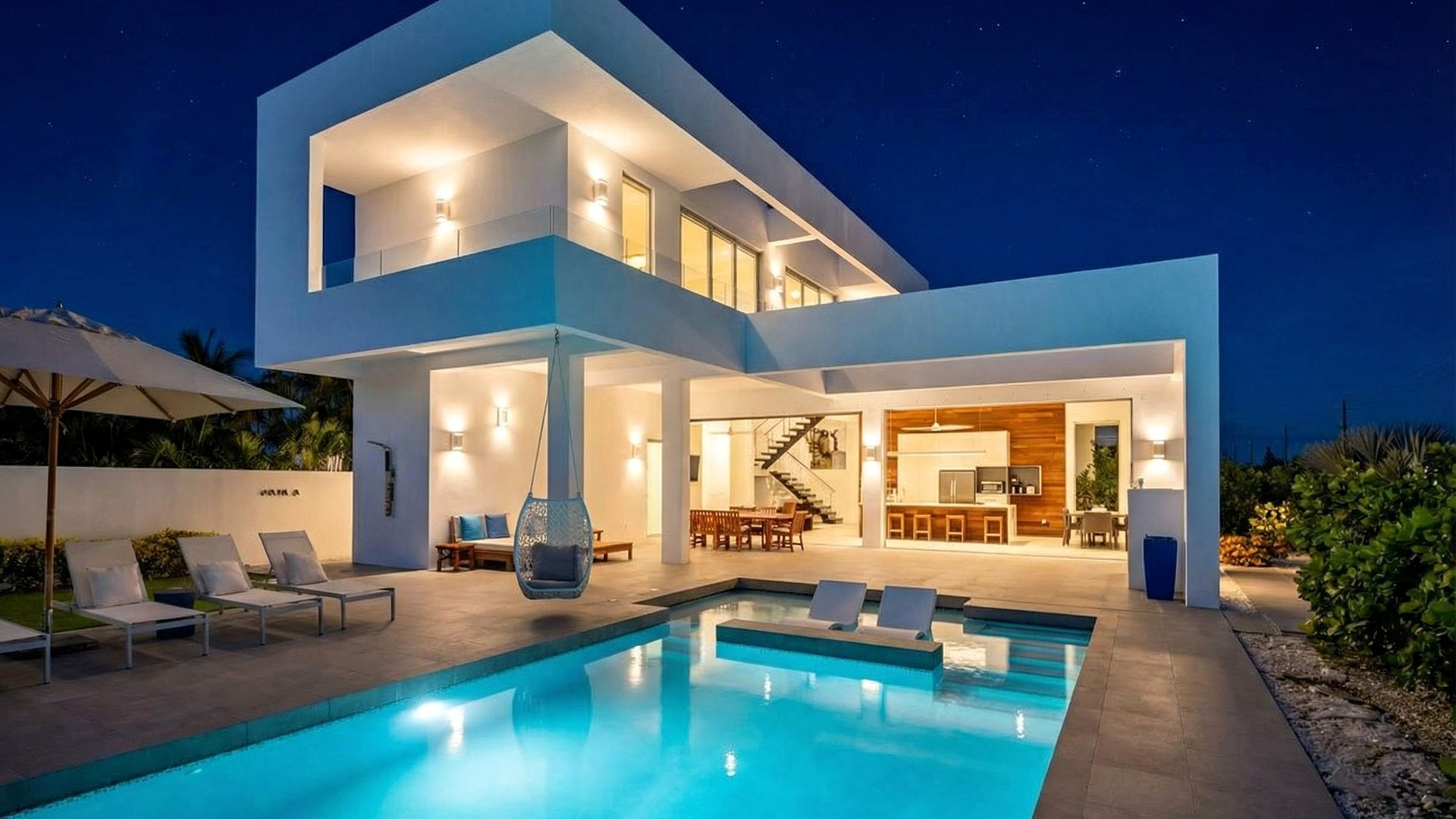
Villa 1 is a two-bedroom villa that sleeps up to six, a good size for a couple, two couples traveling together or a small family. The second bedroom can be set up with two twins or a king.
The pool has a sun shelf with in-water loungers, the spot where January afternoons tend to disappear. The listing also notes beach and sea views.
- Bedrooms: 2; up to 6 guests.
- Pool: private pool with a sun shelf and in-pool loungers, plus an outdoor kitchen.
- Beach: a three-minute walk to Long Bay Beach and about five minutes by car to Grace Bay.
- Open when we checked: January 16 to 23, 2027.
Villa 9: Four Bedrooms for a Late-January Group
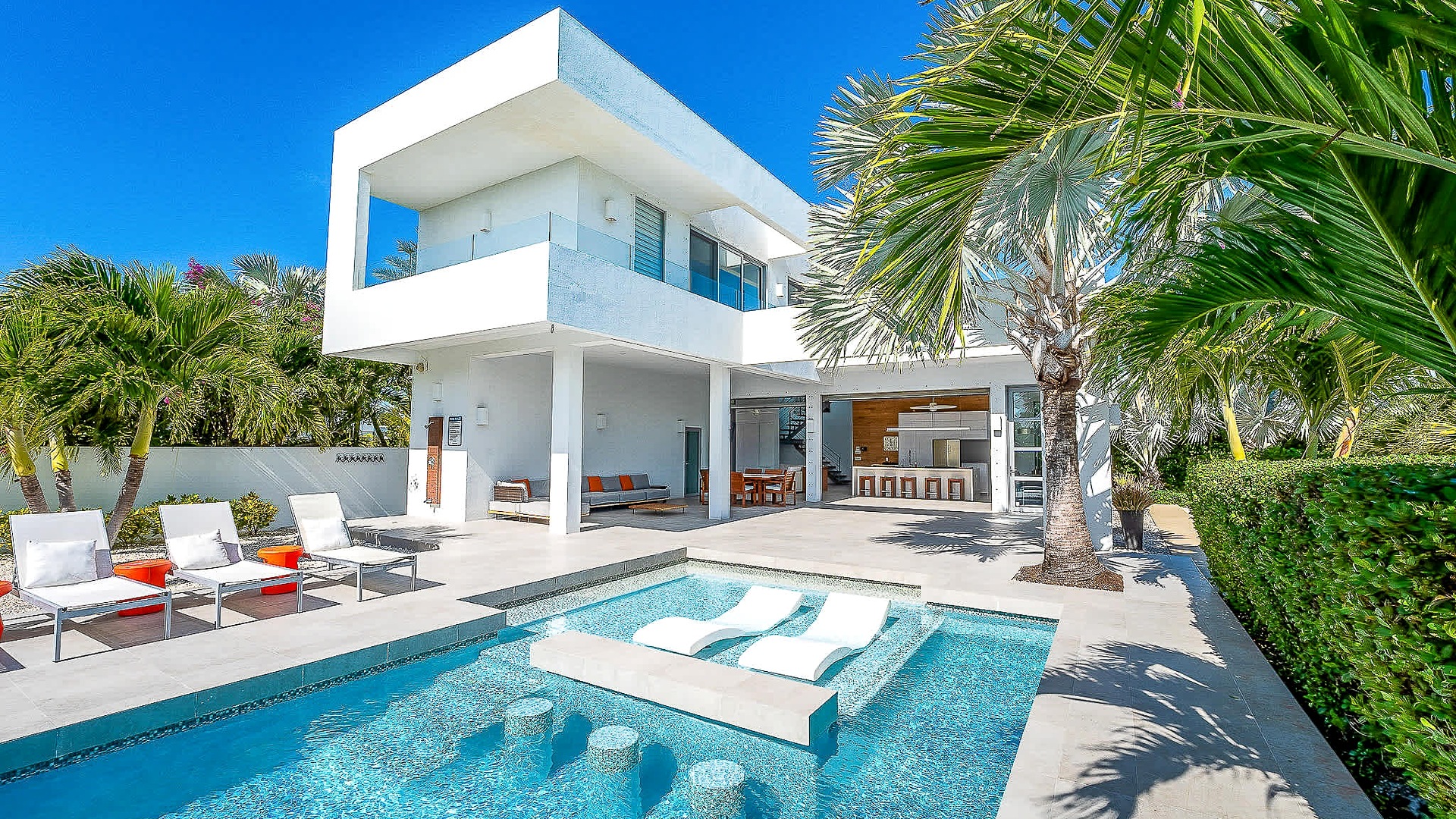
Villa 9 is our pick for a bigger group. It has four bedrooms, two in the main house and two in large pool annexes, and sleeps up to ten (eight adults and two young children).
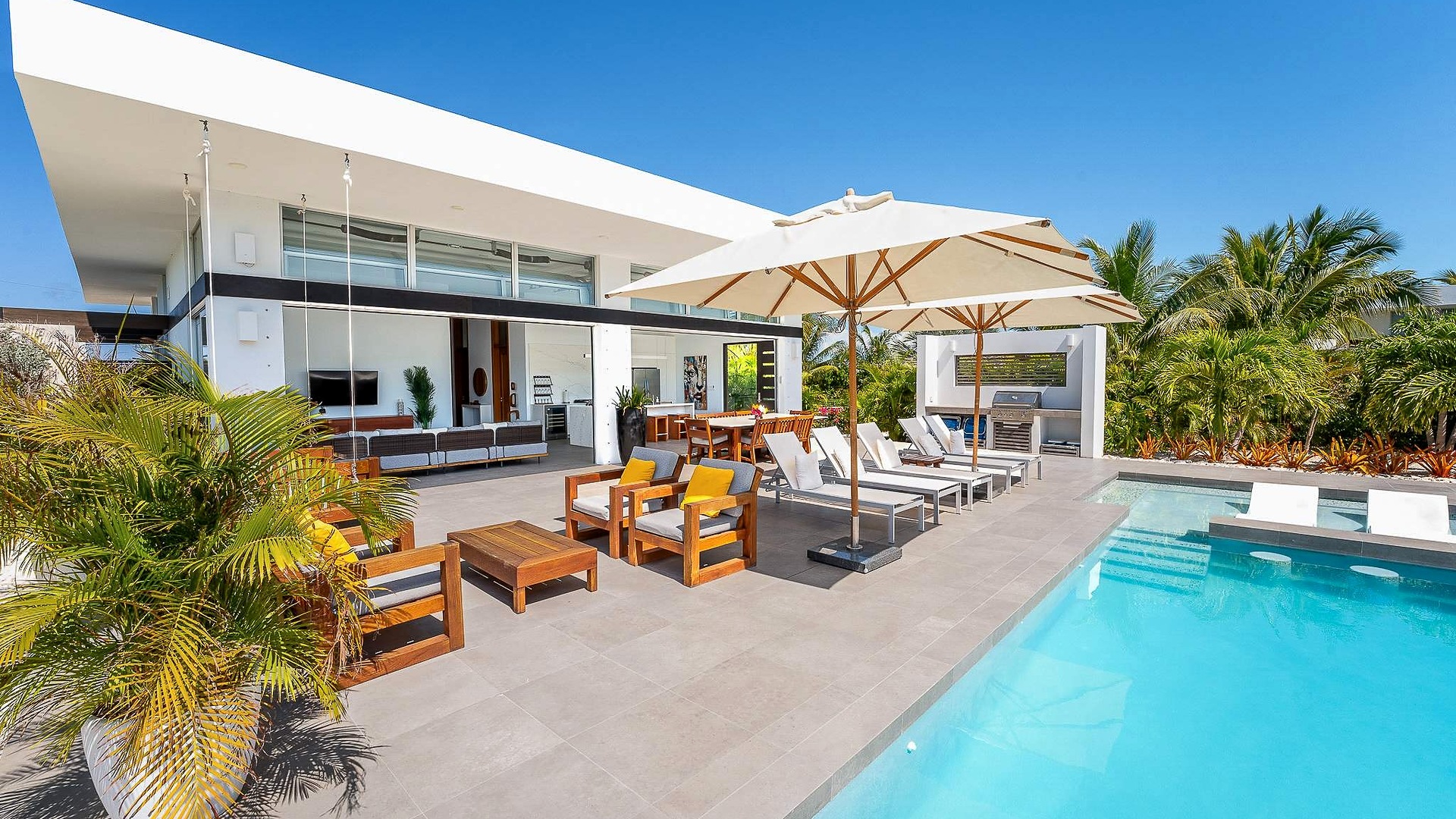
Its pool is the standout: a large pool with a bar, a lap lane and a shallow section, so swimmers and little ones can share it. Shaded terraces and an outdoor kitchen make long lunches at home easy after a morning on the beach.
- Bedrooms: 4, including two pool annexes; up to 10 guests.
- Pool: large private pool with a bar, lap lane and shallow section.
- Beach: a three-minute walk to Long Bay Beach.
- Open when we checked: January 16 to 30, 2027 (two full weeks).
How We’d Plan a January Week From the Villa
Whichever villa you choose, here is the easy, unhurried week we would plan for friends staying with us in January:
- Days 1 and 2: Land, pick up your car and settle in. Spend the first full day on Long Bay: a morning walk at low tide, a swim and an afternoon by the villa pool.
- Day 3: Head to Grace Bay for snorkeling in the morning and dinner by the water.
- Day 4: Take a boat trip to the outer cays, with a stop at Iguana Island to see the rock iguanas.
- Day 5: Try a kiteboarding lesson on Long Bay, or kayak and paddleboard if you prefer something gentler.
- Day 6: Drive to Chalk Sound for its glowing turquoise lagoon, then catch the sunset at Sapodilla Bay.
- Day 7: A slow last morning and a final swim before the 20-minute drive to the airport.
Traveling with kids? Our list of the 9 best Caribbean islands for families looks at the same question through a family lens.
How the Other Islands Compare in January
That is our pick. If you are still weighing your options, here is how six other favorite islands compare, starting with what January looks like across the whole region. The month sits in the heart of the Caribbean dry season and the winter high season, and that shapes a trip in a few ways:
- Warm days, cooler nights: daytime highs on these islands average from the low to mid 80s°F, and evenings drop into the low to mid 70s°F. Pack a light layer for dinner outside.
- Less rain: most of these islands get about 2 inches of rain in January, usually in short showers. San Juan is the wet exception at about 4 inches.
- Steady trade winds: the easterly breeze keeps the heat comfortable and makes January a great month for sailing and kiteboarding.
- Holiday crowds, then calm: the week between Christmas and New Year’s is the busiest of the year almost everywhere. Once New Year’s is over, the pace usually eases on beaches and in restaurants.
- Water near its coolest: the NOAA coastal water temperature guide puts January water at about 80°F to 81°F around Puerto Rico and the US Virgin Islands, and Curaçao’s met service says its sea bottoms out near 79°F in late winter. Still warm enough for long swims, just a few degrees cooler than in late summer.
Each island below has its own January personality. We kept the facts to official sources and added our honest side-by-side comparison with Turks and Caicos for each one.
Aruba
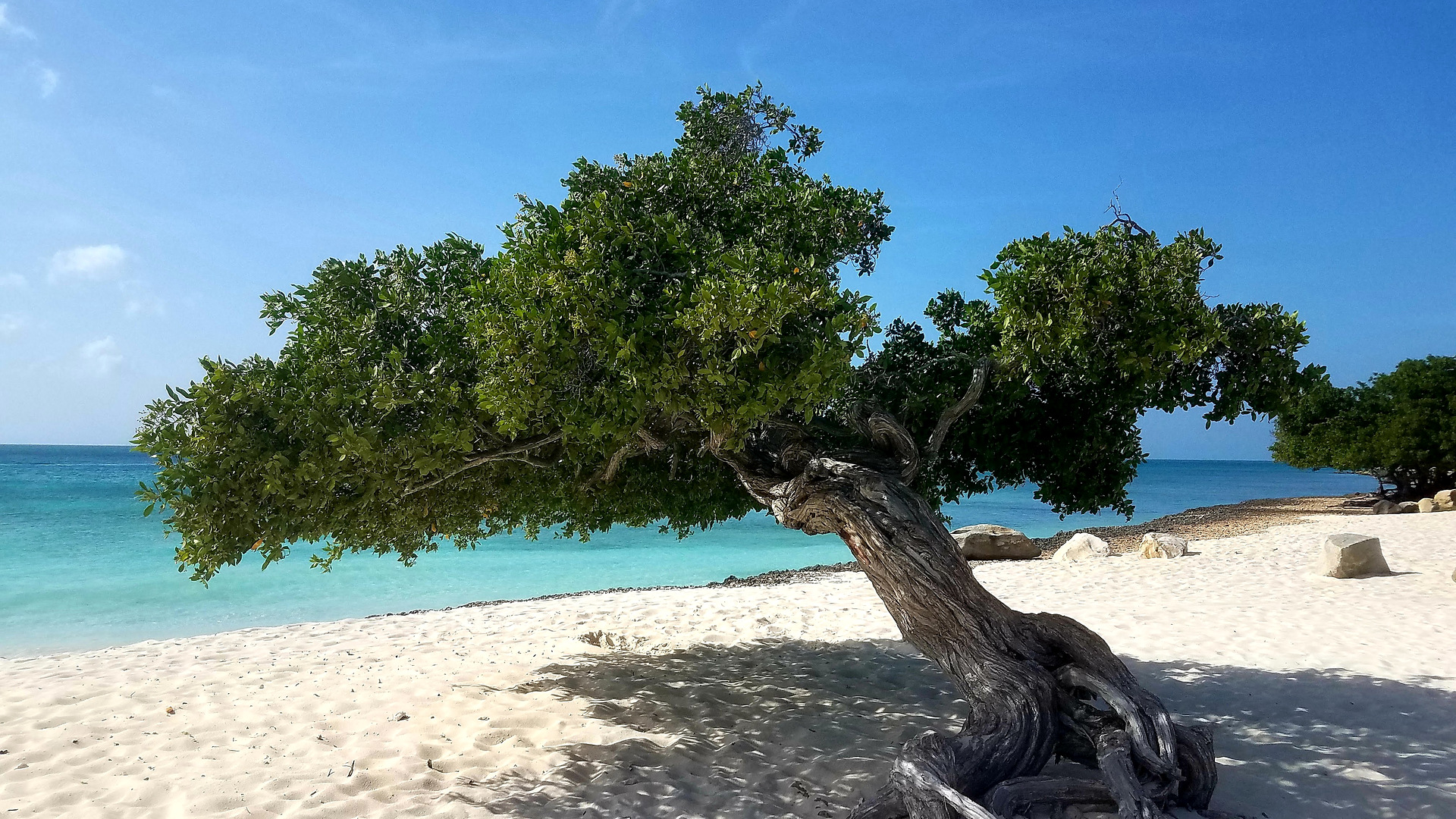
Aruba is the safe bet for guaranteed sun. It sits just off the coast of Venezuela, and its dry, desert-like landscape means January rain usually comes as a passing sprinkle. The trade winds blow hard here, which keeps the heat pleasant and makes the north and east coasts wild and windswept.
The calm, swimming side is the west coast, where Eagle Beach is known for its soft white sand and the twisted fofoti trees that lean toward the water. It is also one of the easiest islands in the Caribbean to reach from the East Coast in January.
- Air temperature: average high 86.5°F (30.3°C), low 76.6°F (24.8°C), the warmest of the islands here.
- Rainfall: about 1.7 inches (44 mm) across about 11 days with measurable rain.
- Wind: a steady easterly trade wind averaging about 16 mph.
- Nonstop flights: Aruba Airport’s January 2027 schedule lists New York JFK, Newark, Boston, Philadelphia, Washington Dulles, Baltimore, Charlotte, Atlanta, Miami, Fort Lauderdale and Orlando. Baltimore runs twice a week; most of the others fly daily or more.
- Crowds: busy all winter, with hotel-lined beaches on the west coast.
- Best for: maximum sun, reliable dry weather and an easy flight.
- Aruba vs Turks and Caicos: our side-by-side if you are torn between the two.
Curaçao
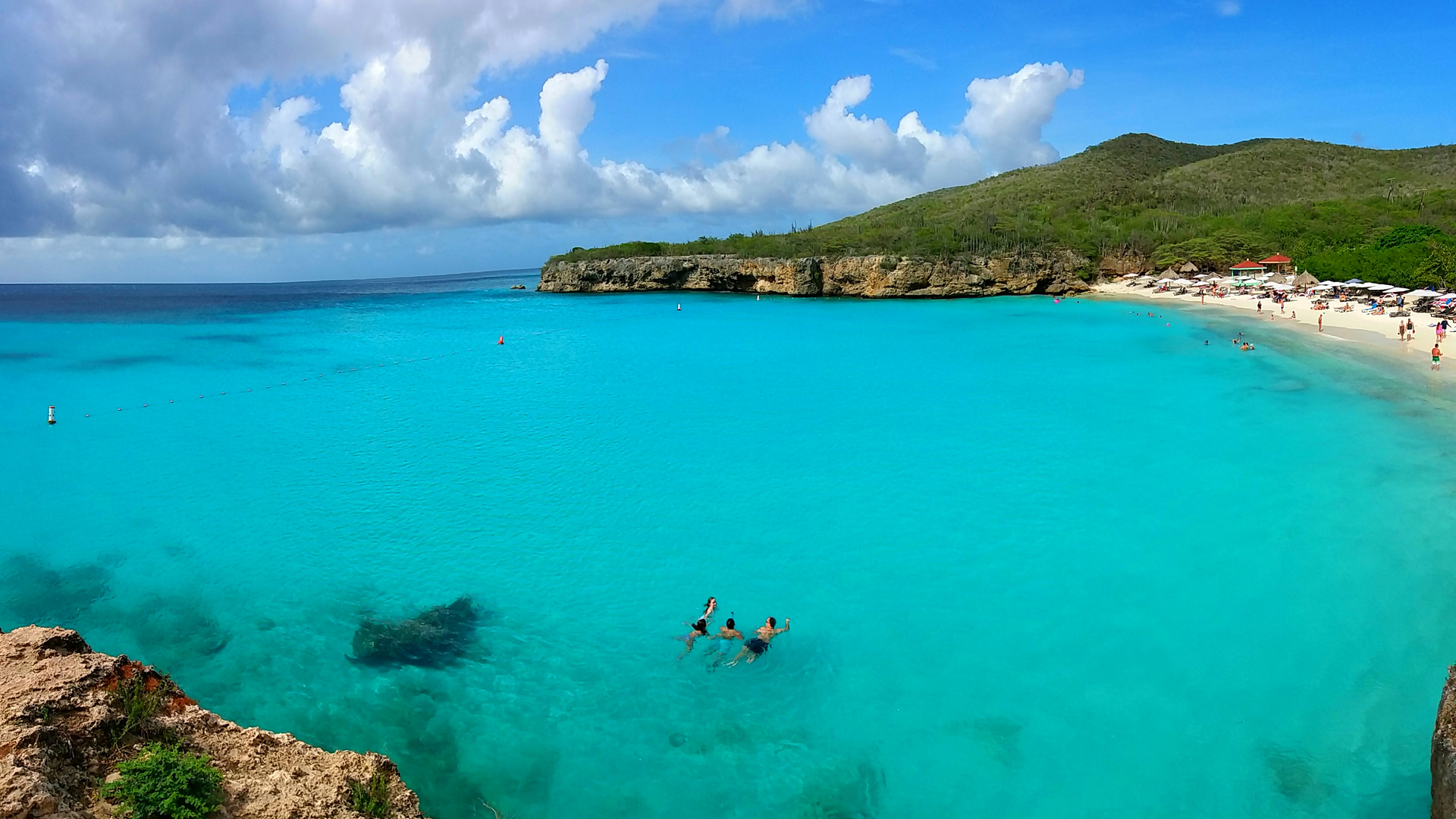
Curaçao is Aruba’s neighbor and nearly its twin in January, almost as warm and almost as dry. The difference is the coastline: instead of one long strip of sand, Curaçao has small coves tucked between limestone cliffs on its west coast, with water so clear it draws snorkelers and divers.
Grote Knip (also called Kenepa Grandi) is the cove most people picture, a bright white beach below a cliff-top lookout. Willemstad, the capital, adds colorful Dutch colonial architecture and a lively food scene for the evenings.
- Air temperature: average high 85.8°F (29.9°C), low 75.9°F (24.4°C).
- Sea temperature: the Meteorological Department Curaçao puts the sea at its coolest around February and March, about 79°F (25.9°C).
- Rainfall: about 1.8 inches (46 mm) over about 8 to 9 rainy days; January is the last month of the local rainy season.
- Wind: easterly trades averaging about 13 mph.
- Nonstop flights: Miami (twice daily) and Charlotte on American, Atlanta on Delta, New York JFK on JetBlue and Newark on Saturdays on United, per Curaçao Airport’s winter schedule.
- Crowds: lighter than Aruba; the popular coves fill up on weekends.
- Best for: snorkeling, cove-hopping and travelers who like a bit of culture with their beach.
- Curaçao vs Turks and Caicos: how the two compare on beaches, water and getting there.
Barbados
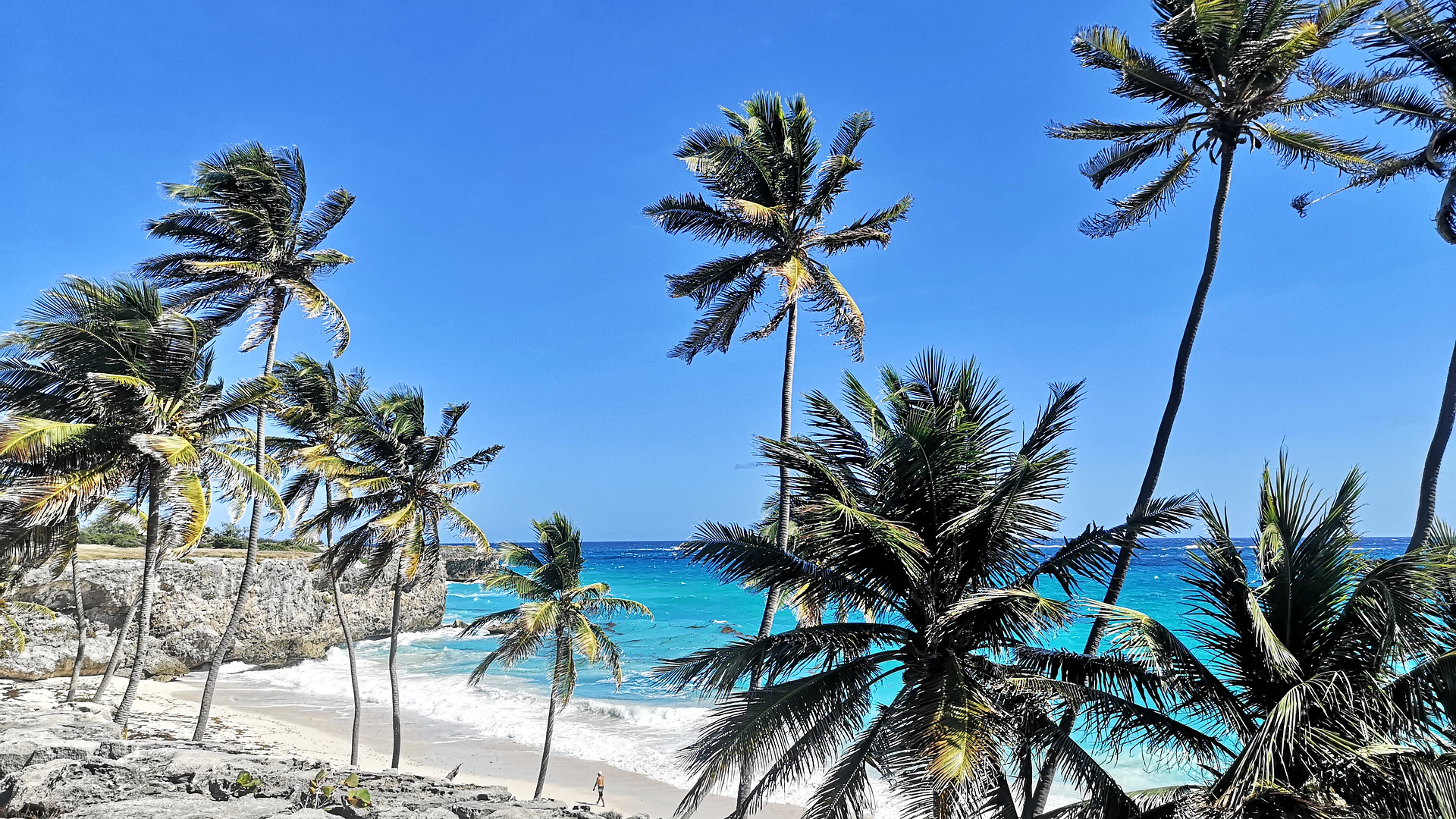
Barbados feels different from the flat, dry islands. The west coast is calm and lined with palms, the south coast has a lively strip of restaurants and rum shops, and the east coast is all Atlantic surf and dramatic rock formations. January is a lovely month here, sunny and breezy, with plenty of daylight.
Bottom Bay on the southeast coast is a postcard of coconut palms, coral cliffs and wild blue water. It is better for photos and a picnic than for swimming, since the Atlantic side can be rough; for calm water, head to the west coast.
- Air temperature: average high 84.4°F (29.1°C), low 73.9°F (23.3°C).
- Rainfall: about 2.4 inches (61 mm) over about 11 to 12 rainy days.
- Wind: steady easterly trades; the east coast takes the surf while the west coast stays sheltered.
- Nonstop flights: United flies from Washington Dulles daily through January 4, then on Saturdays, according to Visit Barbados. Other East Coast routes change by season, so check the airlines for current schedules.
- Crowds: high season on the west coast; the east coast stays quiet.
- Best for: food lovers, varied coastlines and travelers who want more than beach days.
- Barbados vs Turks and Caicos: our take on which trip fits which traveler.
Grand Cayman
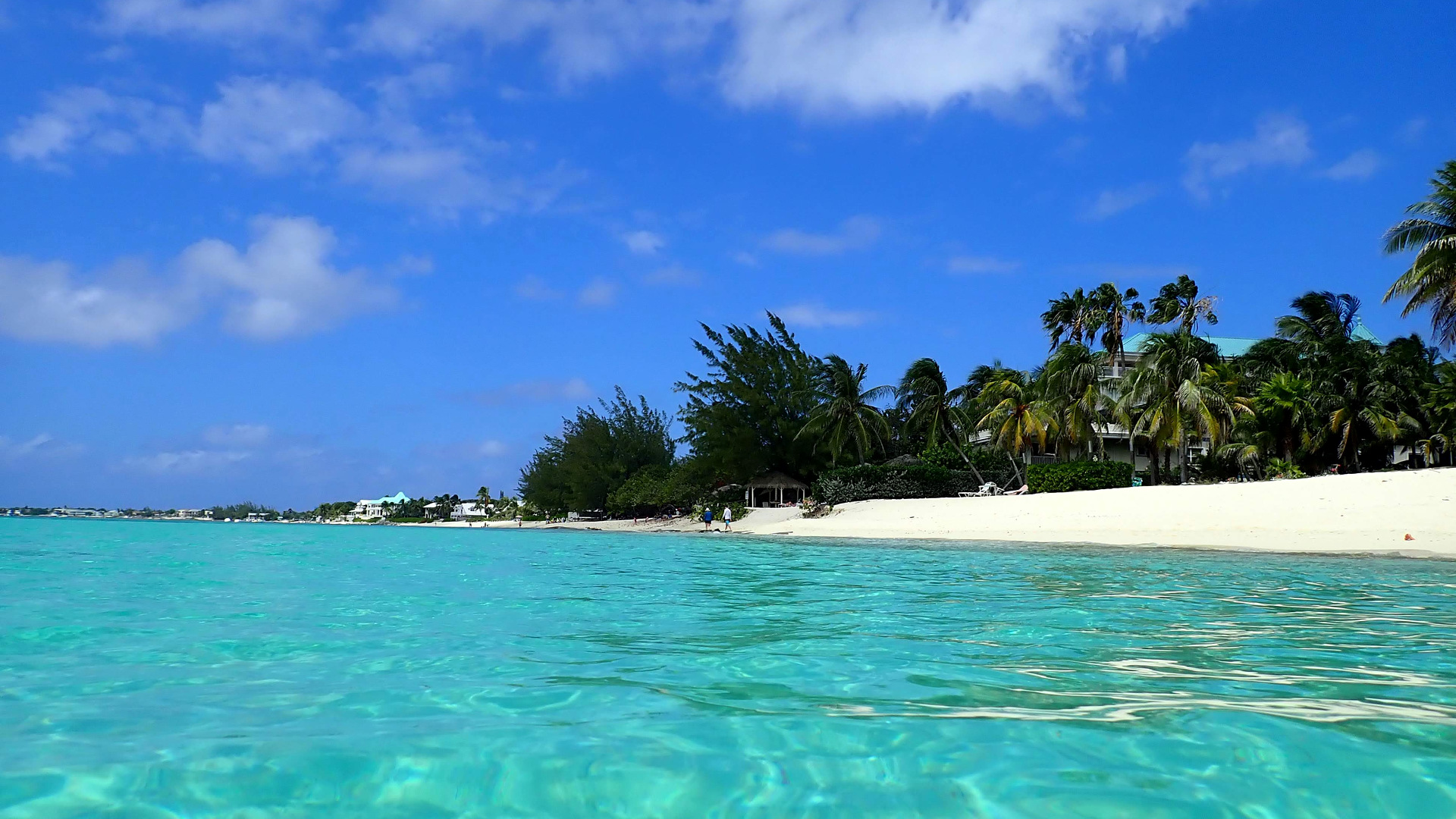
Grand Cayman is polished and easy, with calm water and very few rainy days in January. Seven Mile Beach on the west side is the island’s showpiece, a long stretch of soft sand with gentle, glassy water that suits swimmers and young kids.
The trade-off is that Grand Cayman is busy in winter. George Town is a major cruise port, so some days bring extra visitors to the beaches and the famous stingray sandbar. Snorkeling and diving are excellent all year.
- Air temperature: average high 83.1°F (28.4°C), low 73.2°F (22.9°C).
- Rainfall: about 2.2 inches (55 mm), with only about 5 rainy days, the fewest of the islands here.
- Wind: Seven Mile Beach faces west, away from the trade winds, so the water in front of it is usually calm.
- Nonstop flights: the Cayman Islands tourism board lists Miami (Cayman Airways and American), Charlotte, Atlanta, New York, Newark, Philadelphia and Orlando, plus Saturday flights from Boston, Washington, DC and Baltimore in peak months.
- Crowds: busy, especially on cruise ship days.
- Best for: calm swimming, families and travelers who want everything close by.
- Turks and Caicos vs Cayman Islands: our honest take on the two calmest-water options.
Puerto Rico
Puerto Rico is the easiest island on this list for US travelers: it is a US territory, so there is no passport needed for US citizens and no currency to change. It is also the most varied, with Old San Juan’s colorful streets, El Yunque rainforest and offshore islands like Culebra and Vieques.
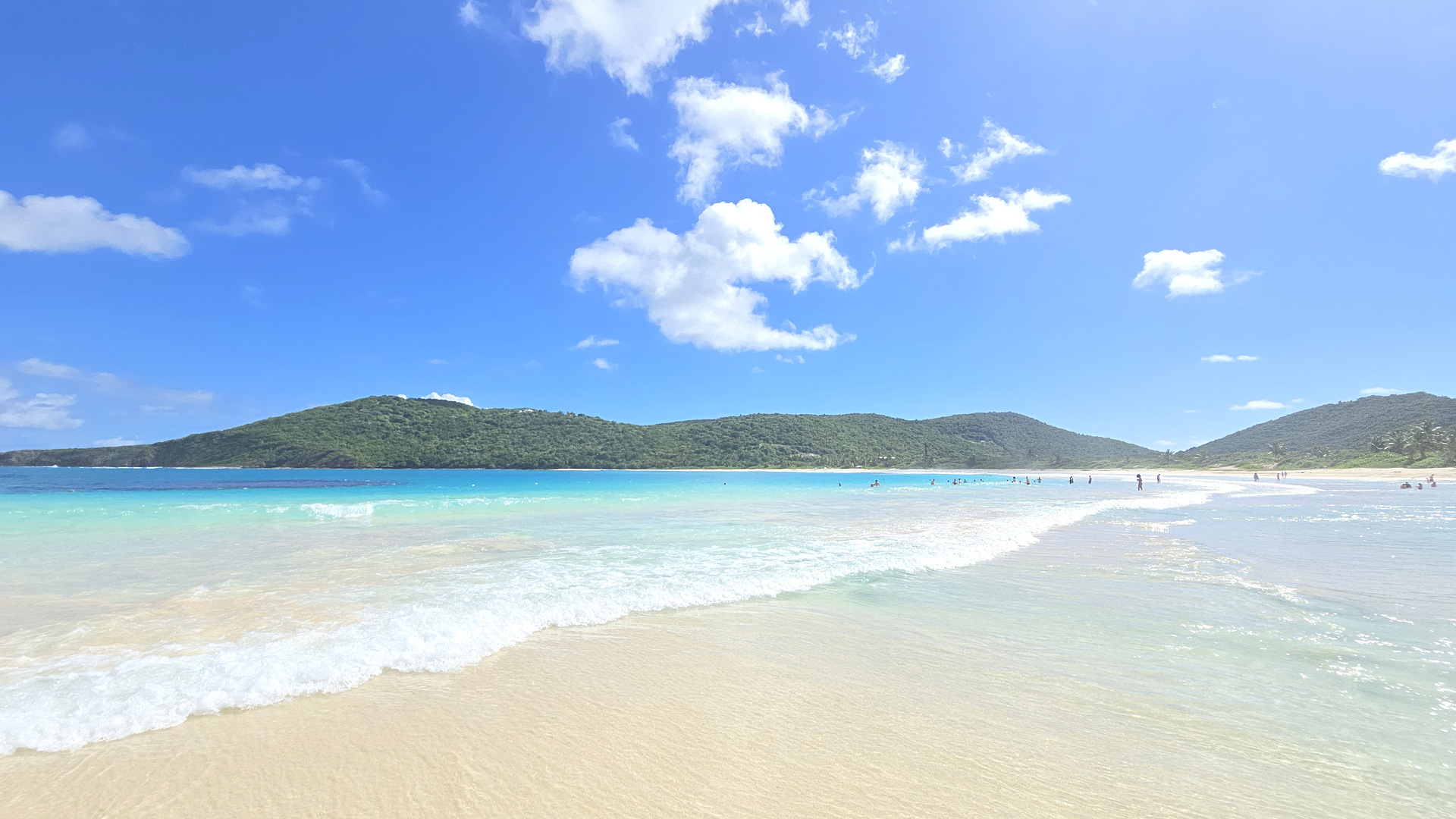
That variety comes with more rain. San Juan gets about twice the January rainfall of the islands above, usually in short showers. For the classic white-sand day, Flamenco Beach on Culebra is worth the ferry or short flight from the main island.
- Air temperature: average high 83.2°F (28.4°C), low 71.9°F (22.2°C) in San Juan.
- Sea temperature: about 80°F to 81°F (27°C) at NOAA’s stations in Culebra, Vieques and offshore north of San Juan.
- Rainfall: about 4.1 inches (103 mm), the wettest January of the islands here.
- Nonstop flights: a domestic flight, with nonstops to San Juan from most major East Coast airports, from Boston and New York down to Miami.
- Crowds: busy in Old San Juan; quieter on Culebra and Vieques on weekdays.
- Best for: first-time Caribbean travelers, no-passport trips and mixing city, rainforest and beach.
- Turks and Caicos vs Puerto Rico: what you trade for the easier trip.
Antigua
Antigua is famous for its claim of 365 beaches, and in January the calm west coast beaches are at their best. The island has a sailing soul, with English Harbour and Nelson’s Dockyard on the south coast, and a slower, more local feel than the busier islands on this list.
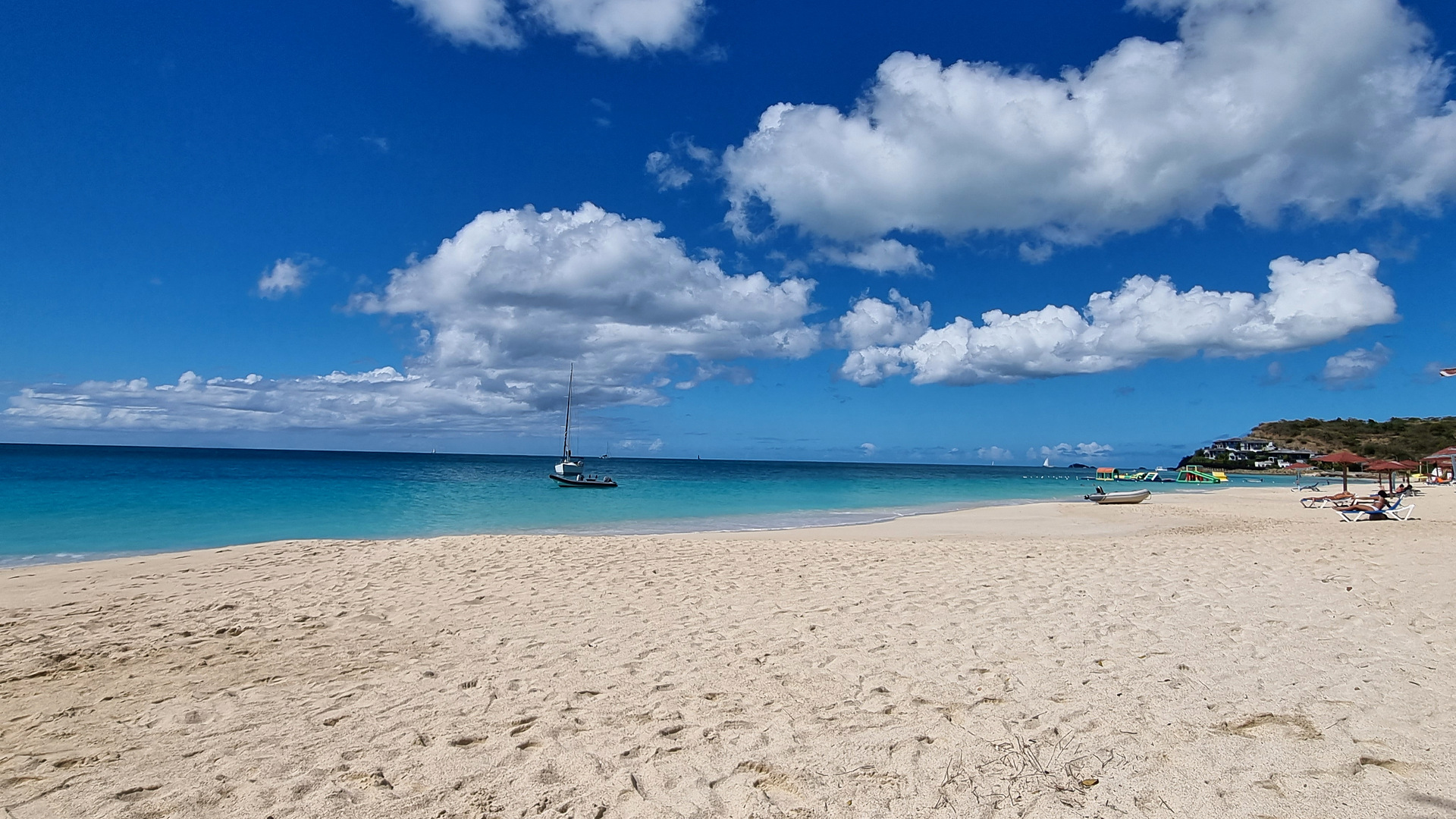
Darkwood Beach on the southwest coast is a favorite for its soft sand and gentle water. January is the coolest month of the six here, but still warm enough for long swims.
- Air temperature: average high 82.8°F (28.2°C), low 72.7°F (22.6°C).
- Rainfall: about 2.2 inches (55 mm) over about 11 rainy days.
- Wind: easterly trades; the west coast beaches sit in the lee of the island.
- Nonstop flights: American flies twice daily from Miami, according to the American Airlines newsroom. JetBlue’s New York route ended after October 2026, per the Antigua and Barbuda Tourism Authority, so check the other carriers for current East Coast options.
- Crowds: moderate; the west coast beaches rarely feel packed.
- Best for: sailors, beach-hoppers and travelers who want a quieter island.
- Antigua vs Turks and Caicos: a closer look at the two islands side by side.
Spend Your January on Long Bay
The best Caribbean island to visit in January depends on what you want from the week. For the most heat, it is Aruba or Curaçao. For variety, Barbados or Puerto Rico. For calm turquoise water, steady trade winds and a private villa a short walk from the beach, we will always say Turks and Caicos.
At White Villas, our 1 to 4 bedroom villas near Long Bay each come with a private pool and a full kitchen, and our team can arrange a private chef, a boat day or a car for your stay. Check our villa availability calendar for open January dates, or send us a message and we will help you pick the right week.
Frequently Asked Questions
What is the best Caribbean island to visit in January?
It depends on your priorities. Aruba and Curaçao are the warmest and driest, Grand Cayman has the fewest rainy days, and Puerto Rico is the easiest for US travelers. For calm, clear water and a private villa near the beach, Turks and Caicos is our pick.
Is January a good time to visit the Caribbean?
Yes. January falls in the dry season for most islands, with warm days, cooler evenings and steady trade winds. It is also high season, so book flights and villas early, especially for the first week of the year.
Which Caribbean island is the driest in January?
Of the islands we compared, Aruba gets the least January rain, about 1.7 inches, followed by Curaçao at about 1.8 inches. Grand Cayman gets slightly more rain but has the fewest rainy days, about 5 in the month.
Is the Caribbean too cold to swim in January?
No. Daytime highs average in the low to mid 80s°F, and the sea stays around 79°F to 81°F at the stations with official data. The water feels cool for the first minute, then pleasant.
What is the best Caribbean island to visit in February?
February is even drier than January on every island here: Aruba averages under an inch of rain, and Grand Cayman about 1.2 inches over 4 rainy days. The same islands shine, and Turks and Caicos adds humpback whale season near Grand Turk and Salt Cay.
What is the best Caribbean island for first-timers?
Puerto Rico is the simplest for US travelers, since no passport is needed. Turks and Caicos and Aruba are also easy first trips, with nonstop flights from the East Coast and calm, beautiful beaches.