



The Coral Restoration Project Running Quietly Beneath the Surface of Grace Bay
Most people come to Grace Bay for the postcard view: soft white sand, glassy water, and that famous shade of blue. We get it. We chose Long Bay Beach for exactly the same reason. But after years of living here and listening to our guests come back from snorkel trips full of questions, we realized something quietly remarkable was happening just below the surface of Grace Bay.
There is a coral restoration project running here. It is not loud, it does not have a flashy tour, and most visitors leave without ever knowing it exists. At White Villas, we think it is one of the most interesting stories in Providenciales, so we put together this local guide to share what is happening, where you can see it, and how to be part of it during your stay.
What Is Actually Happening Beneath Grace Bay
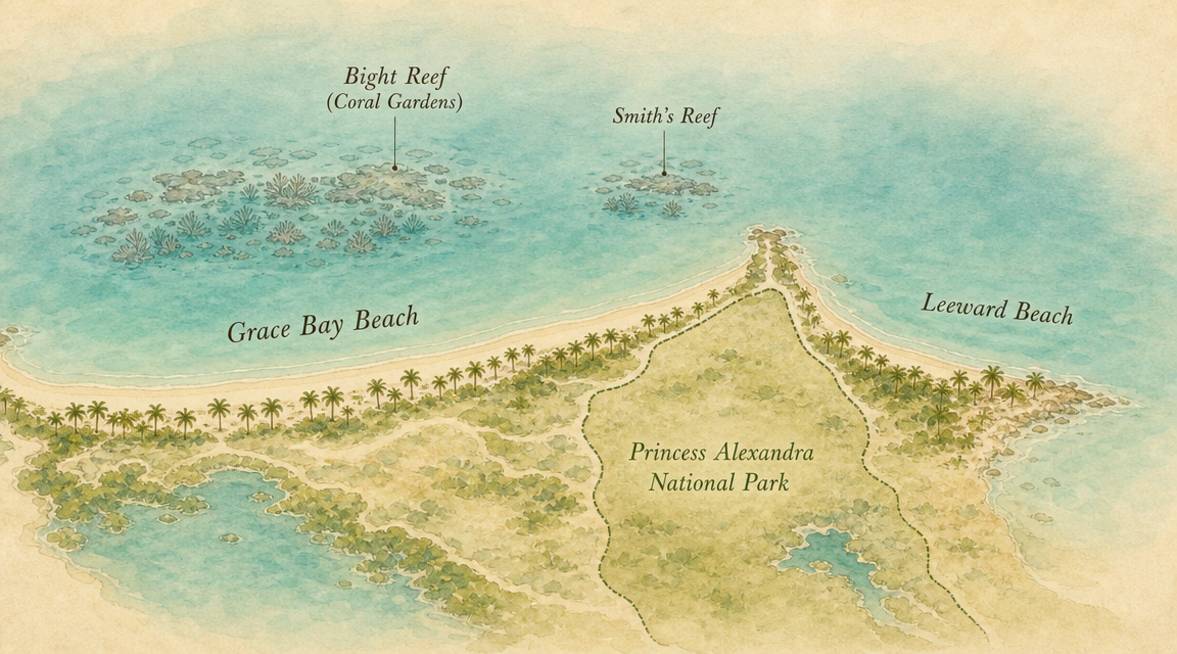
The reefs along the north shore of Providenciales sit inside Princess Alexandra National Park, a marine-protected area that stretches from Grace Bay Beach to Leeward and includes Smith’s Reef, The Bight Reef, and a long stretch of the northern barrier reef.
Inside that protected zone, the Turks and Caicos Reef Fund (TCRF) runs the quiet, ongoing work of rebuilding what warming seas and coral disease have damaged. The headline numbers are worth pausing on:
- More than 5,000 staghorn coral fragments growing in in-water nurseries off Northwest Point, including at a dive site called ThunderDome
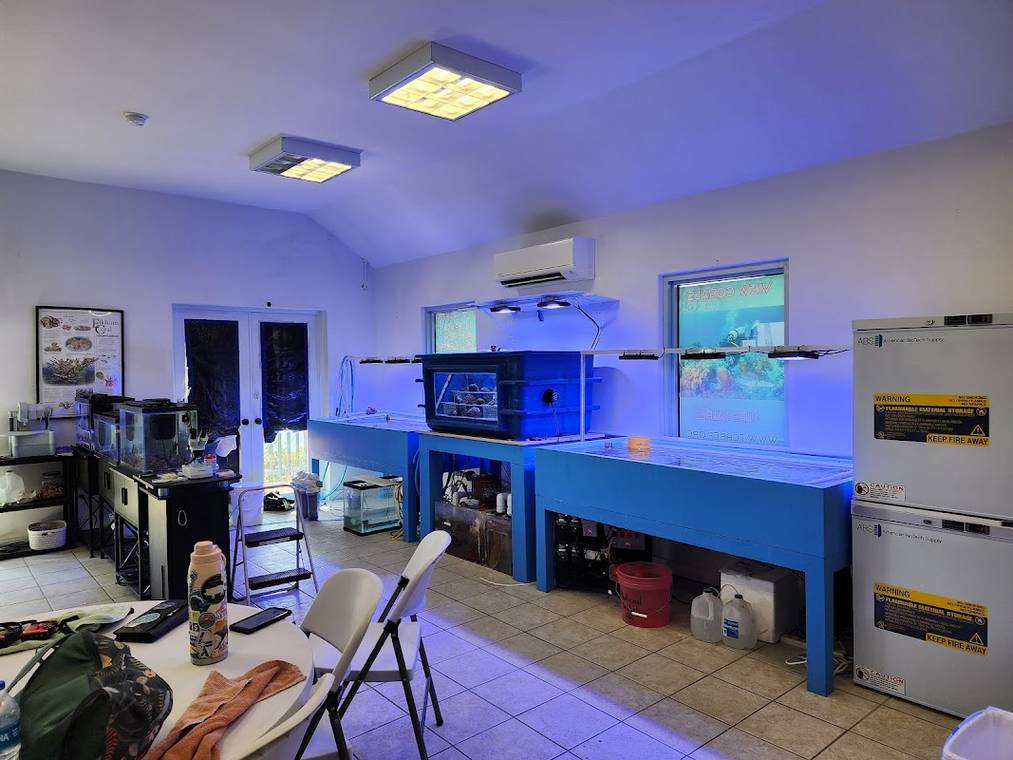
- A land-based living coral biobank holding around 205 colonies of 11 different coral species, kept as a genetic backup for the most threatened Caribbean corals
- Outplanting of nursery-grown corals back onto natural reefs around Providenciales, with monitoring to track survival
The corals being focused on include staghorn (Acropora cervicornis) and likely elkhorn (Acropora palmata), two of the most endangered hard corals in the Caribbean. They grow fast, build the kind of branching structure that fish and lobster shelter in, and have been hit hard by both bleaching and Stony Coral Tissue Loss Disease (SCTLD).
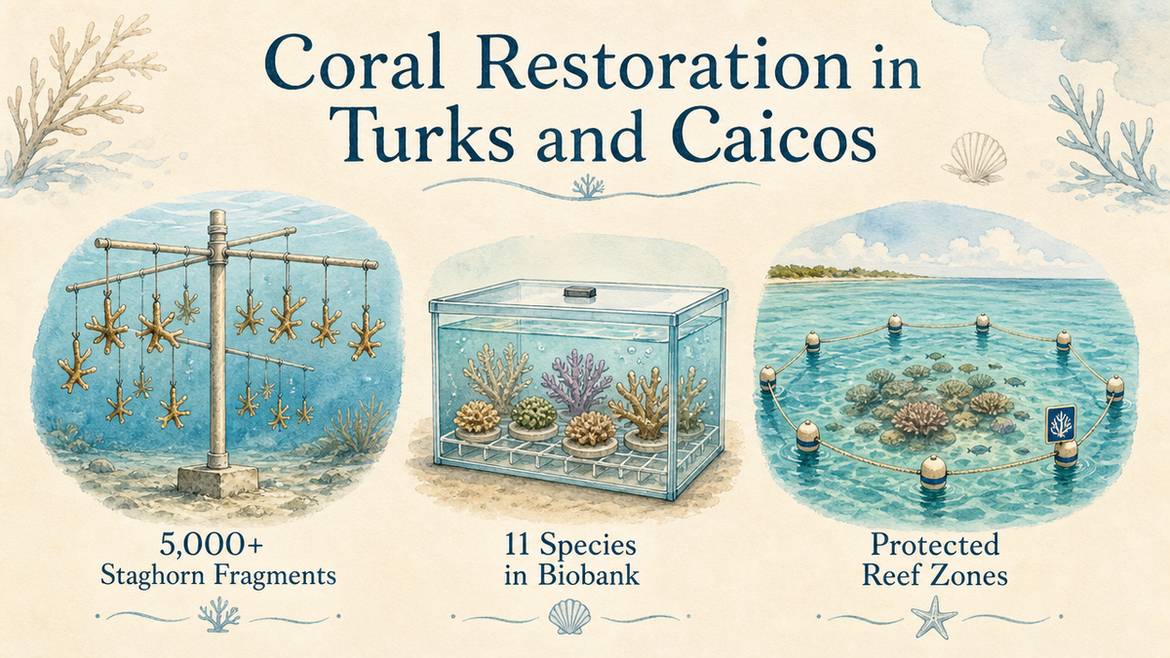
Quick insight: A single staghorn fragment, no bigger than a finger, can grow into a small colony in a couple of years. Multiply that by 5,000 and you start to understand why this work matters.
Where You Can See It (Without a Special Tour)
You will not find a “coral nursery tour” sign on Grace Bay. The nurseries themselves are off-limits to casual snorkelers for good reason. But the reefs they are feeding back into are easy to reach and free to visit. These are the spots we send our guests to first.
Bight Reef (Coral Gardens)
This is the most popular shore-entry snorkel on Providenciales, and it sits right inside Princess Alexandra National Park. The water is shallow, the entry is sandy, and you will find a roped-off conservation zone in the middle of the reef. That circle of buoys is not a swim lane. It is a protected area where the coral is being given space to recover, so stay outside it.
- Rating: 4.4 (72 reviews)
- Location: The Bight Settlement, Providenciales
- What to expect: Parrotfish, angelfish, snappers, the occasional green turtle, and a clear view of how fragile reef tissue actually is
- Best time: Mornings between 10 and 11 when the light is soft and the crowds are still settling in
The corals here have visibly bleached in recent years, which honestly makes a visit more meaningful. You are seeing the exact reef the restoration work is trying to protect.
Learn more about Coral Gardens Reef
Smith’s Reef
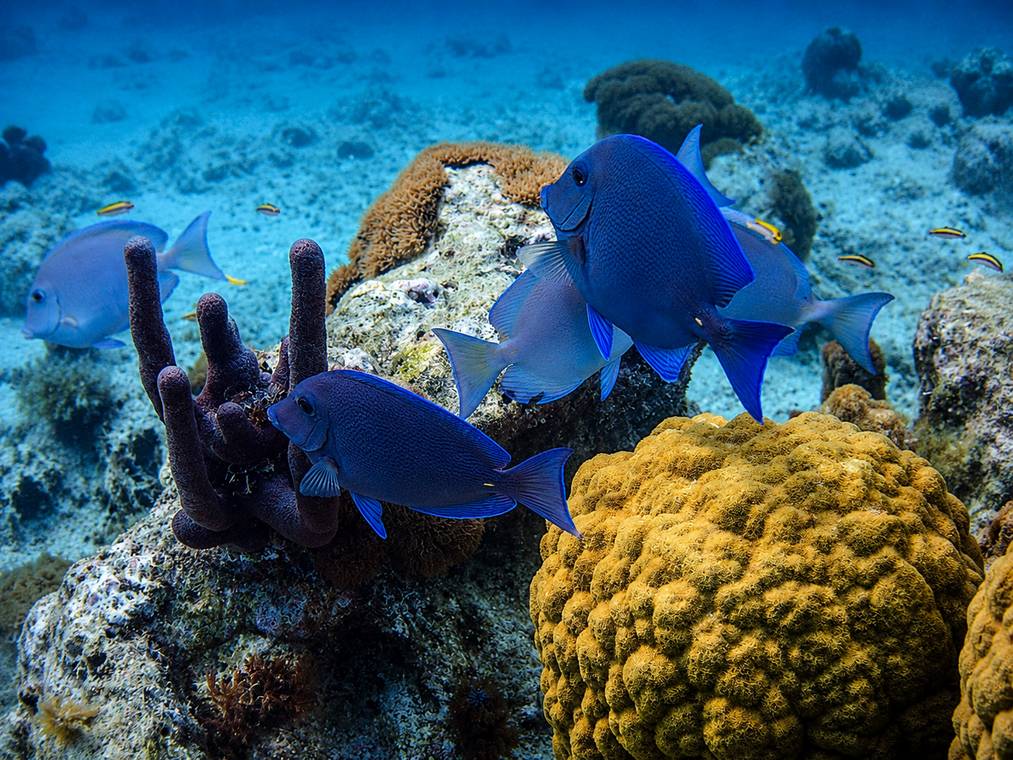
Smith’s Reef is our quiet pick. It is shore-accessible from Turtle Cove, less trafficked than Bight Reef, and the coral structure is more varied. Guests who like to snorkel for an hour and actually drift through different reef sections love this one.
- Rating: 4.7 (518 reviews)
- Location: Coconut Road, off Lower Bight Road
- What to expect: Green sea turtles, rays, eagle rays, schools of grunts, and tucked-away critters in the coral pockets
Heads-up: glass-bottom tour boats run close to this reef, so stay visible and avoid going too deep near the channel to the harbor.
Princess Alexandra National Park
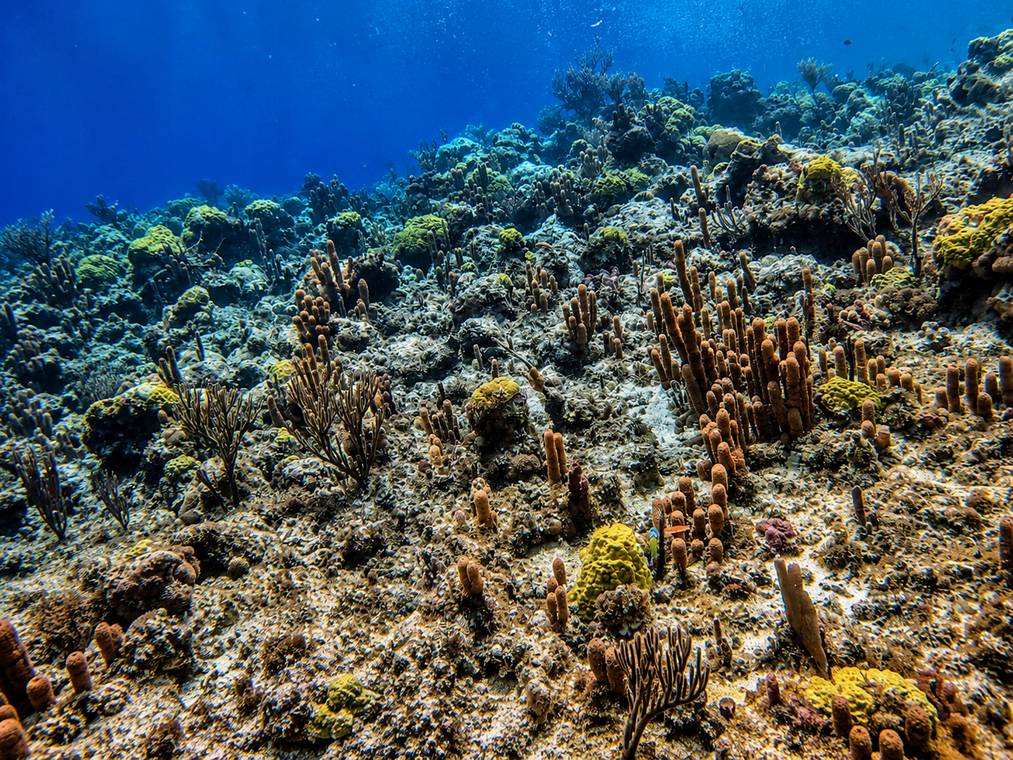
The reefs above sit inside this marine-protected area, which is the umbrella that makes restoration possible at all. The park covers Grace Bay Beach, The Bight, Leeward, and a long section of the barrier reef. Knowing you are inside a protected zone changes how you behave in the water, and that is the point.
- Rating: 4.5
- Location: North shore of Providenciales
- Good to know: No fishing, no anchoring on coral, no removing shells or coral fragments (alive or dead). Reef-safe sunscreen is strongly encouraged
Learn more about Princess Alexandra National Park
The People Doing the Work
The restoration project does not just happen. A small group of organizations and operators makes it possible, and they are easy to support during your stay.
Turks and Caicos Reef Fund
TCRF is the local NGO running the nurseries, the biobank, and the day-to-day reef monitoring. They take direct donations, sell symbolic “adopt a coral” memberships, and partner with operators across the island to fund their work. If you only support one local conservation group during your visit, this is the one.
- Rating: 4.7 (6 reviews)
- Location: Long Bay Hills, Providenciales
- How to help: Visit their site, donate, or look for the TCRF logo when booking water tours
Learn more about Turks and Caicos Reef Fund
Big Blue Collective
Big Blue is the most established eco-tour operator on the island. Their guides know the protected reefs well, they are conservation-trained, and they support TCRF directly. We send guests their way when they want a snorkel trip that comes with real context, not just photos.
- Rating: 4.9 (680 reviews)
- Location: Leeward Highway, Leeward Settlement
- Best for: Half-day snorkel and kayak combos, paddleboard reef tours, and family eco-trips
Learn more about Big Blue Collective
Caicos Dream Tours
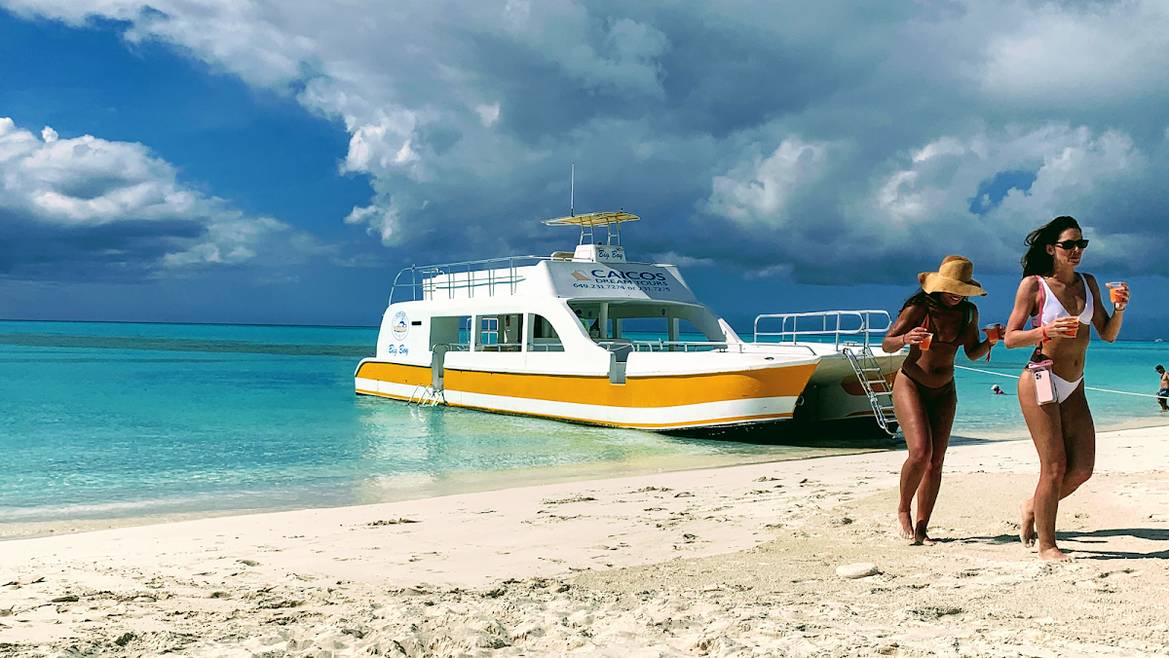
If you want a more classic boat day, Caicos Dream Tours runs reef snorkel trips that visit some of the most photogenic sites in the park. They emphasize reef etiquette on every trip, which we appreciate, and they have one of the highest review counts of any operator on the island.
- Rating: 4.8 (947 reviews)
- Location: Princess Drive, The Bight Settlement
- Best for: Half and full-day boat snorkels and barrier reef trips
Learn more about Caicos Dream Tours
Turtle Cove
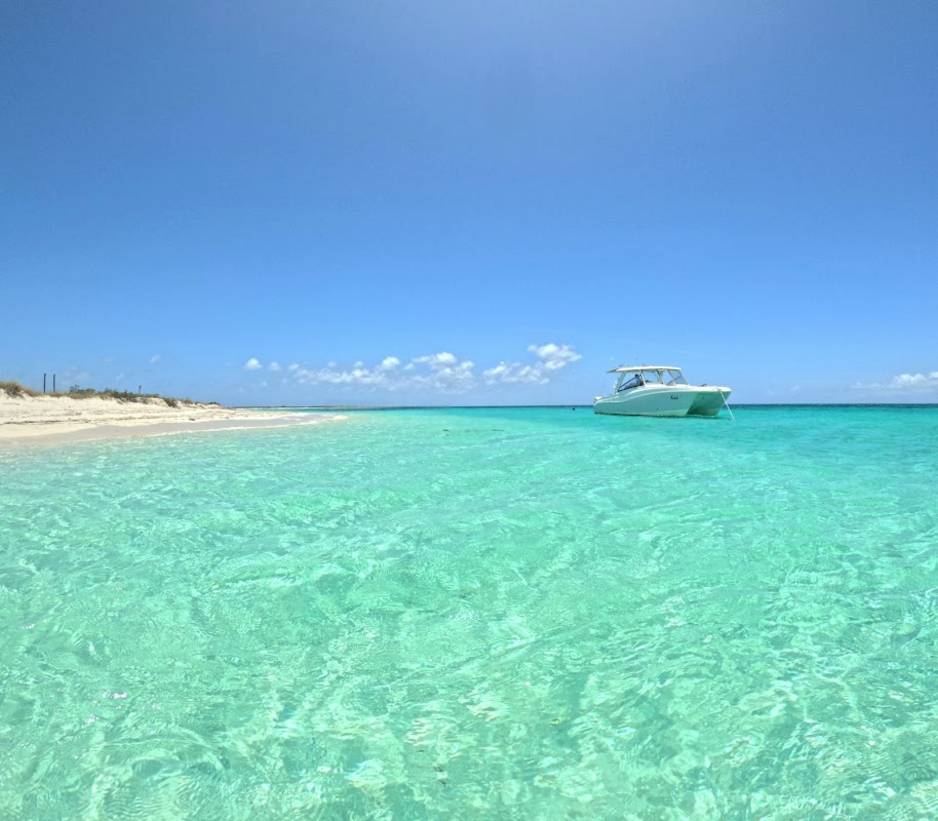
Worth knowing as both a snorkel-adjacent landmark and a marina hub for many of the tour operators. Several reef trips depart from here, and it is also the closest mainland point to Smith’s Reef.
- Rating: 4.8 (34 reviews)
- Location: Turtle Cove, Providenciales
How to Snorkel Like You Are Helping
You do not need to be a biologist to be useful. Most reef damage from visitors is unintentional. A few small habits make a real difference.
- Float, do not stand. A single kick into a coral head can break years of growth. Use the open sandy patches between corals if you need to rest
- Skip the touch. Even gentle contact transfers oils, sunscreen, and bacteria into the coral tissue
- Reef-safe sunscreen only. Look for non-nano zinc oxide formulas. Skip anything with oxybenzone or octinoxate
- Stay outside the buoys. The roped zone at Bight Reef is not a swim lane. It is a protected area
- Leave the souvenirs. Removing live or dead coral, shells, sand, or sea fans is illegal in the Turks and Caicos
- Report what you see. Bleached patches, coral disease, or anchor damage can be reported to TCRF. Photos help
Local tip: If you book through Big Blue Collective or Caicos Dream Tours, a portion of your trip already supports reef monitoring. That is the easiest way to give back without doing anything extra.
Plan Your Stay With Us
The coral restoration project running beneath the surface of Grace Bay is one of those stories that makes a vacation feel different. You come for the water and the beaches; you leave knowing there is a quiet, careful effort to keep them that way.
At White Villas, we are happy to point you to the right reefs, the right operators, and the right times to go. If you want a stay that puts you minutes from Bight Reef, Smith’s Reef, and the whole stretch of Princess Alexandra National Park, take a look at our luxury villas in Turks and Caicos and reach out if you have questions. We are usually a quick reply away.
Frequently Asked Questions
Is there really a coral restoration project at Grace Bay?
Yes. The Turks and Caicos Reef Fund runs coral nurseries and a land-based biobank that directly support the reefs inside Princess Alexandra National Park, which includes Grace Bay. The work is ongoing, low-profile, and not run as a tourist attraction.
Can visitors snorkel at the coral nurseries?
No. The in-water nurseries off Northwest Point are not open to casual snorkelers. Visitors can support the project by snorkeling responsibly at the reefs the nurseries feed into, like Bight Reef and Smith’s Reef.
What coral species are being restored?
The flagship species is staghorn coral (Acropora cervicornis), with more than 5,000 fragments in nurseries. A land-based biobank also holds around 11 species of threatened Caribbean corals, including likely elkhorn coral and several large reef-building species.
Where is the best place to see coral while snorkeling from shore?
Bight Reef (also called Coral Gardens) and Smith’s Reef are the two best shore-entry snorkel spots on Providenciales. Both sit inside Princess Alexandra National Park.
How can I support the coral restoration without joining a tour?
Donate directly to the Turks and Caicos Reef Fund, follow reef etiquette while snorkeling, use reef-safe sunscreen, and book tours with operators who openly support TCRF, like Big Blue Collective.
Is the coral at Grace Bay healthy?
The reefs inside the park have been affected by warming water, bleaching, and Stony Coral Tissue Loss Disease, which is exactly why the restoration project exists. Healthy patches remain, and recovery is visible at restoration sites, but the work is far from finished.