



Salt Cay: The Smallest Inhabited Island in Turks and Caicos
A few miles southeast of Grand Turk sits a slip of land that most travelers fly straight over. We are talking about Salt Cay, the smallest inhabited island in Turks and Caicos. At White Villas, we host guests from our beachfront resort on Long Bay, Providenciales, and one of the questions we hear most often from returning visitors is: “what is the most untouched part of this country?” Our answer, every time, is Salt Cay.
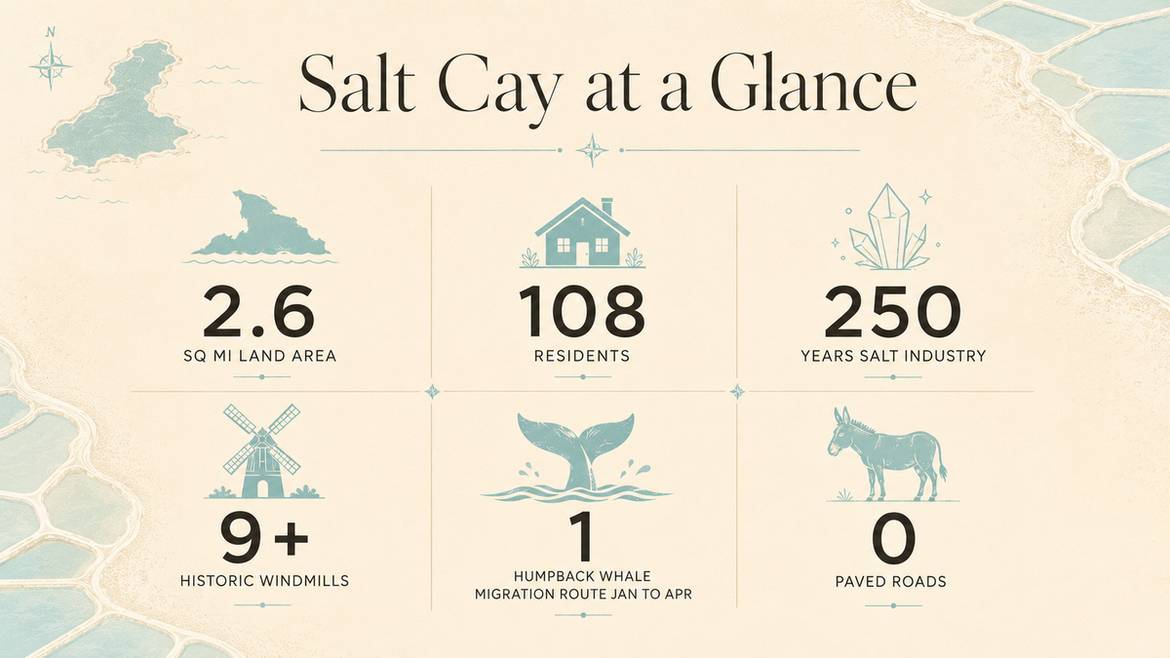
This little triangle of sand, salt ponds, and old colonial homes is roughly 2.6 square miles. Around 100 people live here. There are no traffic lights, no cruise terminals, no all-inclusive resorts, and no paved roads. What it does have is something far more rare in the Caribbean: a community and landscape that has held on to its old shape while most other islands moved on.
In this guide, we share what Salt Cay still protects, what to see when you visit, and how to plan a day trip or longer escape from our home base in Providenciales.
What Makes Salt Cay So Different
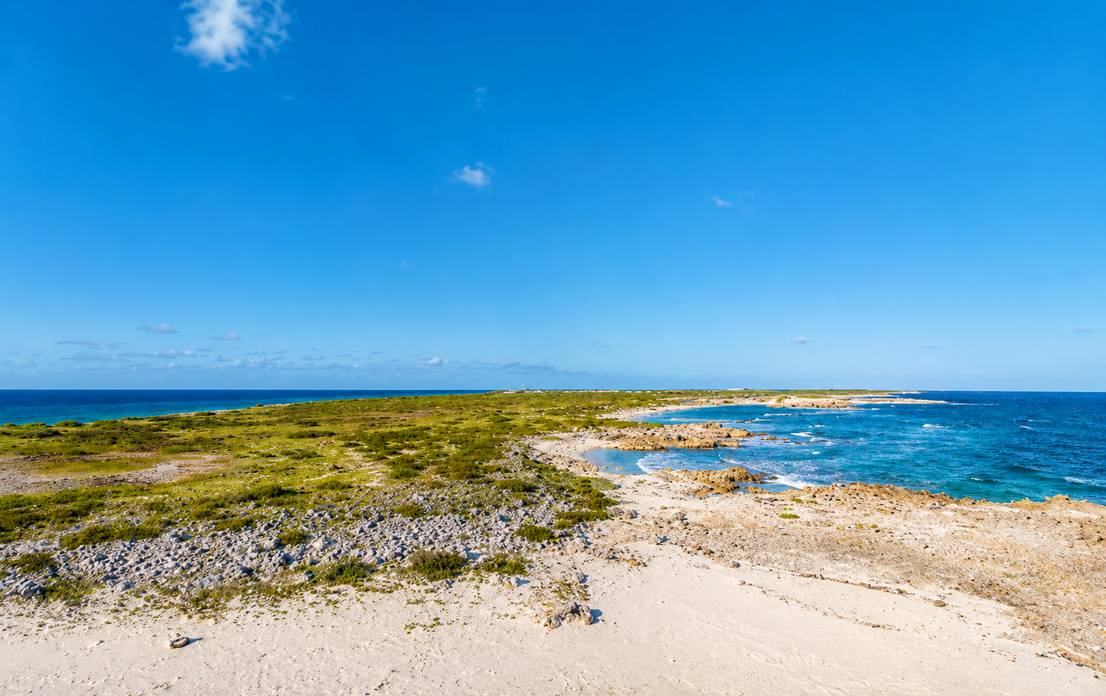
Salt Cay sits on the southeastern edge of the country, exposed to steady trade winds and warm, shallow water. The island is roughly triangular, about 3.2 km on each side, and most of its interior is taken up by old salt salinas rather than houses or roads.
The numbers tell the story of what happened here:
- Population today: around 108 residents, all living in Balfour Town
- Population during the salt boom (1700s and 1800s): around 700 people
- Land area: about 2.6 square miles (6.7 km²)
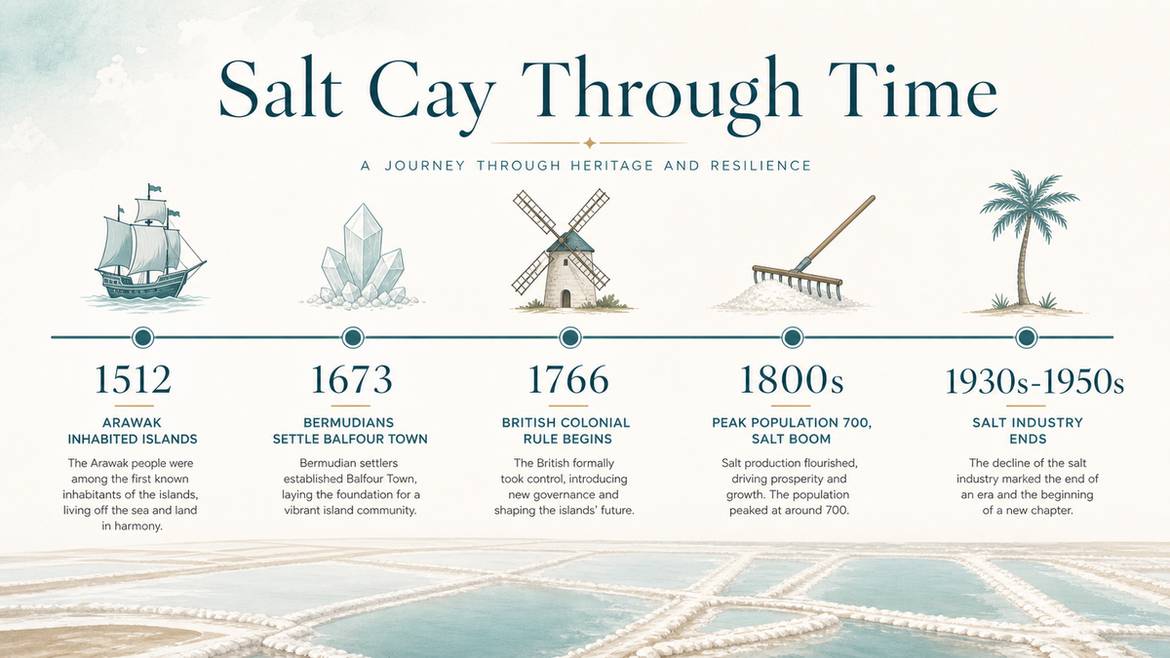
- Year Bermudians first settled here: 1673
- Year the salt industry effectively ended: 1930s to 1950s
For about 250 years, sea salt from this tiny island fed export markets across the British Empire. When that economy collapsed, most of the population left. What stayed behind was the physical landscape of the salt trade, almost completely intact: stone-lined canals, low salina walls, windmill foundations, salt warehouses, and the colonial homes of the salt barons.
On Providenciales and Grand Turk, where development moved faster, much of this layer was paved over, rebuilt, or lost to storms. On Salt Cay, the old shape of the working island is still legible from the air. That is why the island has been nominated as a possible UNESCO World Heritage Site, the only one in Turks and Caicos.
💡 Local tip: The donkeys and cattle you see wandering through Balfour Town are descendants of the working animals once used to haul salt and supplies. They roam freely and have full right of way on every sandy track.
A Quick Look at the History
To understand what Salt Cay preserved, it helps to know the timeline.
The Turks and Caicos were inhabited by the Arawak people when Juan Ponce de León reached the Turks Islands in 1512. By the late 1600s, Bermudians were settling Salt Cay, drawn by the natural saline ponds. They turned those ponds into commercial salinas, and from the late 17th century onward, salt became the backbone of the country’s economy.
At peak production, the island worked with a complex hydraulic system:
- Seawater was channeled into large ponds through stone-lined canals
- Nine or more windmills pumped water from one pond to the next
- As the water concentrated, it moved to progressively smaller pans
- Workers hand-harvested the salt crystals and loaded them for export
The Turks and Caicos came under British colonial rule in 1766, and salt remained the main export for the next two and a half centuries. The industry finally folded due to global competition, rising costs, and the lack of a deep-water harbor for modern ships. Many families moved to Grand Turk, Provo, or off-island entirely.
What stayed put are the bones of that economy, and that is what makes a visit here feel like a step back in time.
Historic Sites to See on Salt Cay
The whole island reads like an open-air museum. These are the places we recommend our guests put on a half-day walking or biking tour.
Balfour Town
Balfour Town is the only settlement on Salt Cay and serves as the district capital. It was established in 1673 by Bermudian settlers and has barely grown in scale since. The town centers on sandy streets, stuccoed limestone block buildings, a small harbor, and a handful of restored colonial homes.
Walking it takes about 30 minutes end to end. You will pass salt warehouses, the old district commissioner’s house, and small front porches where locals often invite you to stop and chat.
- Location: Center of Salt Cay, Turks & Caicos Islands
- Best for: Slow walking, photography, and meeting locals
See Balfour Town on Google Maps
The Old Salinas
The salinas are the most striking feature of the island. They cover much of the interior, and their low stone walls, sluice gates, and remaining windmill foundations are exactly where they were placed two and three centuries ago. Today, the old ponds also support waterbirds like flamingos, herons, and pelicans.
Locals still collect a small amount of sea salt from these ponds for personal use, keeping a tangible thread of the original industry alive after almost 300 years.
- Best for: Birdwatching, history, and golden-hour photography
- Tip: Wear closed shoes since some pond edges are rough
Deane’s Dock and the Waterfront
Deane’s Dock is the main port and the gateway for visitors arriving by ferry from Grand Turk. The surrounding waterfront still has the scale and feel of a 19th-century salt-loading harbor. Small boats shelter close to shore, and a few restored buildings line the path inland.
This is also a great spot to watch fishermen come in and to start a sunset walk along the western coast.
- Rating: 4.8 nearby on Google
- Location: Victoria Street, Balfour Town, Salt Cay
How to Get to Salt Cay From Providenciales
This is the question we get most from guests at our resort. Salt Cay is not on the main hop most people take across Turks and Caicos, but it is reachable in a single travel day from Providenciales.
You have two practical options:
- Fly via Grand Turk. Take a short domestic flight from Providenciales to Grand Turk on InterCaribbean Airways, then a brief connecting flight or charter to Salt Cay. This is the fastest route and the most common one.
- Fly to Grand Turk and take the ferry. From Grand Turk, a passenger ferry crosses the Turks Island Passage to Salt Cay in about 30 to 45 minutes, depending on conditions.
We help guests at White Villas plan this itinerary regularly. The trip works either as a long day or as an overnight stay on Salt Cay before returning to our beachfront resort on Long Bay Beach. If you want a quieter day off the main island without leaving, we can also arrange in-house chef service, boat charters, and other Turks and Caicos water activities right from our property.
💡 Good to know: Confirm flight times and ferry schedules at least two days before your trip, especially during whale season. Both can shift with weather, and Salt Cay does not have a busy stand-by schedule.
Where to Stay if You Want to Sleep on Salt Cay
There are no large resorts on Salt Cay. Lodging is limited to small guesthouses, cottages, and a handful of private villas, most independently owned and self-catering. Many include bicycles or golf carts for getting around. If you choose to stay overnight, plan to bring snacks and supplies from Provo or Grand Turk since the island’s small grocery stock is limited.
For most of our guests, the simplest setup is to base in Providenciales, where you have the full range of luxury villa rentals in Turks and Caicos, in-house chef services, beach access at Long Bay Beach, and all amenities, then take a planned day trip or overnight to Salt Cay for the heritage and the whales. You get the slow magic of Salt Cay and the comfort of a resort to return to.
Best Time to Visit Salt Cay
Salt Cay is good year-round, but the season shapes the experience.
- January to April: humpback whale migration. The best window for whale watching and one of the most special wildlife experiences in the Caribbean.
- November to May: dry season. Calm seas, light winds, ideal for snorkeling, diving, and walking the historic sites.
- June to August: warm, quiet, and excellent for water clarity on dive sites. Restaurants may have limited hours.
- September and October: peak Turks and Caicos hurricane season. We tend to recommend planning around it.
Plan Your Salt Cay Day Trip With Us
Salt Cay is the kind of place you visit once and remember forever. The salinas, the donkeys, the whales just offshore, the quiet streets of Balfour Town: it all feels held in place from a slower century. We think every visitor to Turks and Caicos who is curious about the country’s real history should set aside at least a day for it.
At White Villas, we plan these trips for our guests as part of their stay on Long Bay Beach in Providenciales. We can arrange the flights, ferries, and dive bookings, and have a private villa with a beach view ready for you to come back to. If you are starting to map out your trip, take a look at our villa rentals and our Providenciales activity guide, and reach out when you are ready. We would love to help.
Frequently Asked Questions
Is Salt Cay really the smallest inhabited island in Turks and Caicos?
Yes. Salt Cay is the smallest of the main inhabited islands in the country, with an area of about 2.6 square miles and a population of roughly 108 people, almost all in Balfour Town.
How do you get to Salt Cay from Providenciales?
The most common route is a short flight from Providenciales to Grand Turk on InterCaribbean Airways, then either a connecting flight or a passenger ferry across to Salt Cay. The ferry crossing from Grand Turk takes about 30 to 45 minutes.
Can you see whales on Salt Cay?
Yes. From January through April, Salt Cay sits along the humpback whale migration route through the Turks Island Passage. Whales can often be seen from shore, from kayaks, and on organized boat trips with operators like Salt Cay Divers.
Are there restaurants on Salt Cay?
There are only a few. Coral Reef Bar, Porter’s Island Thyme, and Pat’s Place are the main spots, but hours vary by season and day. Visitors should confirm which places are open before they go and plan for some self-catering if possible.
What is the best beach on Salt Cay?
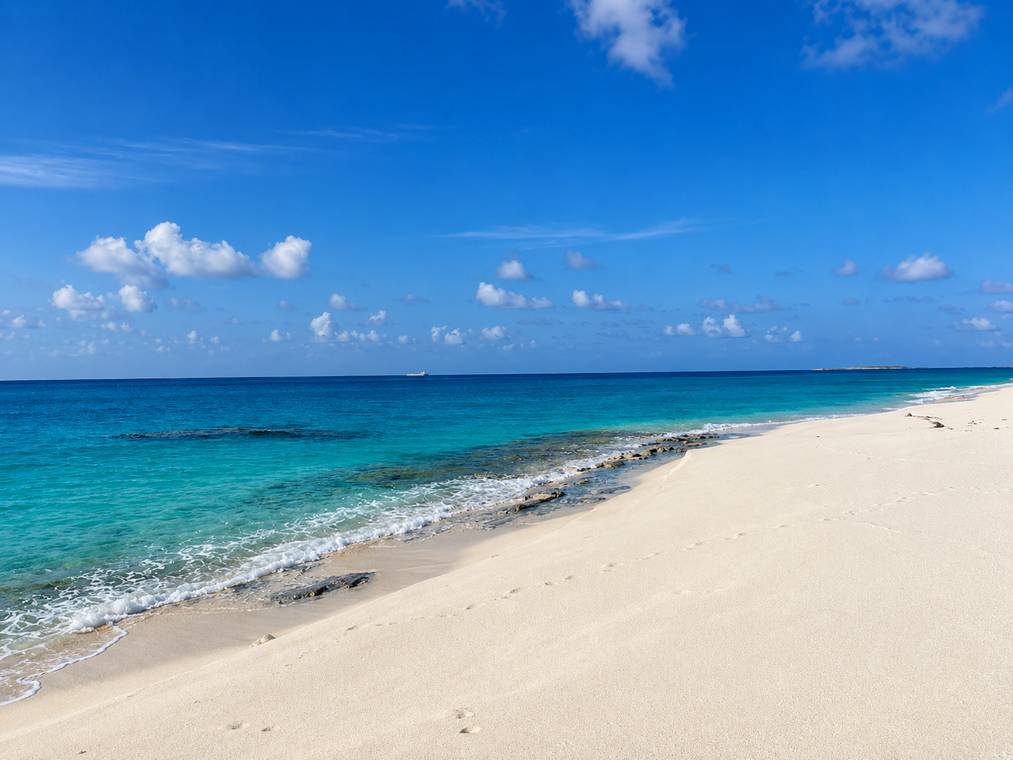
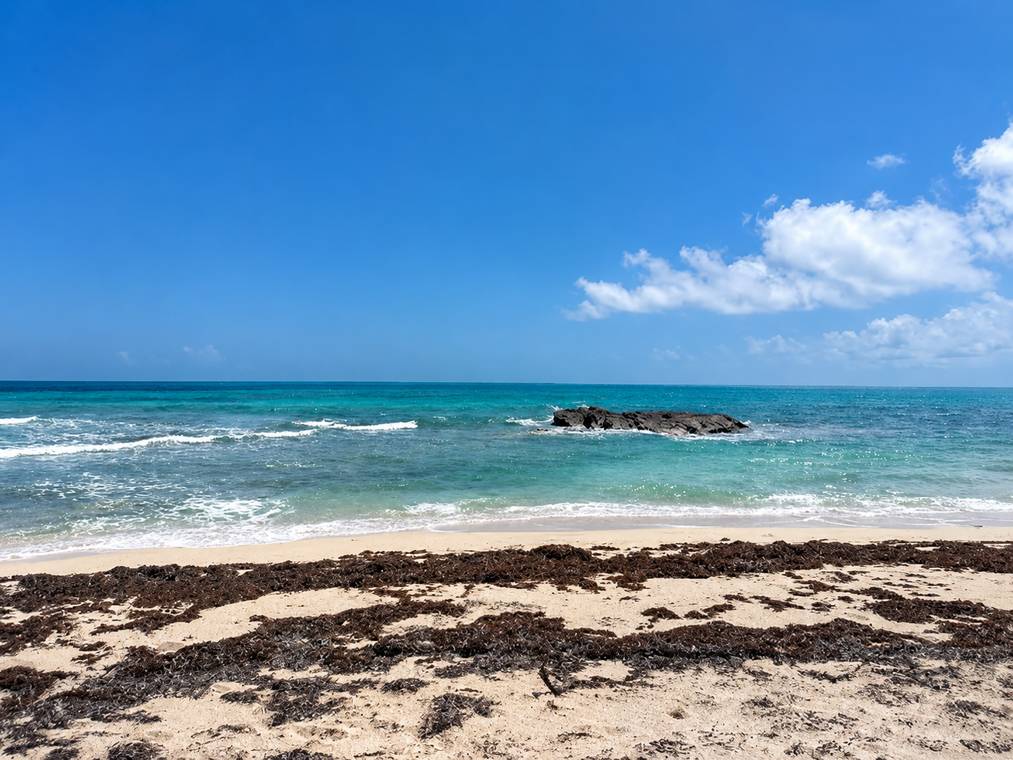
North Beach is the standout, with fine white sand, calm turquoise water, and one of the best shore snorkeling spots in the country. Coral patches start a short swim from the beach.
Is Salt Cay a UNESCO World Heritage Site?
Salt Cay has been nominated for UNESCO World Heritage Site status based on its remarkably intact salt-industry landscape and colonial architecture. If designated, it would be the only such site in Turks and Caicos.