



Turks and Caicos Fishing: Charters, Species & Local Tips
When we settled on Long Bay Beach in Providenciales after visiting more than fifteen Caribbean spots, the water was the thing that sold us. The light, the colors, the sheer life moving below the surface. Years of welcoming guests to White Villas later, the question we still hear most often is some variation of, “Where do we go to fish?”
This guide pulls together what we have learned from our reservations team, our captains, and the guests who keep coming back to White Villas specifically for the fishing. You will find the charter operators we trust, the species and seasons that matter, the license and conservation rules you need to know, and how to plan a fishing day around a comfortable home base on the island.
Why Turks and Caicos Is a World-Class Fishing Destination
Turks and Caicos sits on a marine shelf where shallow flats meet a wall that drops thousands of feet into open ocean. Offshore boats can be on top of fish in under fifteen minutes from Providenciales, while bonefish guides poll across knee-deep water on the Caicos Banks the same morning. That combination is rare. Most Caribbean destinations specialize in one or the other.
A few things to know before you book:
- Four kinds of fishing happen here: deep-sea sport fishing, bonefishing on the flats, reef and bottom fishing, and deep drop fishing for snapper and grouper at 300 to 1,500 feet.
- Charter durations are typically half-day (4 hours), three-quarter day (6 hours), or full-day (8 hours).
- Boats range from light skiffs for the flats to 40 to 60 foot Hatteras, Bertram, Viking, and Benchmark sport yachts with air-conditioned cabins.
- Many full-day trips include a beach BBQ on a secluded cay where the crew grills your catch.
- A fishing license is required for everyone aged 16 and over, even passengers on a boat with gear aboard.
Book your Fishing & Snorkeling Tour – Reserve a Fishing Charter
Best Turks and Caicos Fishing Charter Operators
We have sent guests out with most of the captains on the island. The list below covers the operators we hear back about most, ranked by reputation, vessel quality, and the kind of personalized service that matters when you are spending half a day at sea with strangers.
Grand Slam Charters Ltd.
A 20-plus year fixture of the Provo fishing scene. Grand Slam runs a full fleet from Turtle Cove and offers everything from shared bottom-fishing trips to private deep-sea charters and guided bonefishing. Captains Blaze, Leo, Flex, and Dario keep coming up by name in guest reviews, which tells you something about how long this team has been together.
- Rating: 4.7 stars (72 reviews)
- Address: The Moorings 144, Lower Bight Rd, Turtle Cove, Providenciales
- Phone: +1 649-231-4420
- Hours: Mon to Thu 7:30 AM to 4 PM, Fri 7:30 AM to 4 PM, Sat 7:30 AM to 3 PM, Sun 7:30 AM to 1 PM
- Best for: Mixed groups that want to combine fishing with reef snorkeling
- View on Google Maps
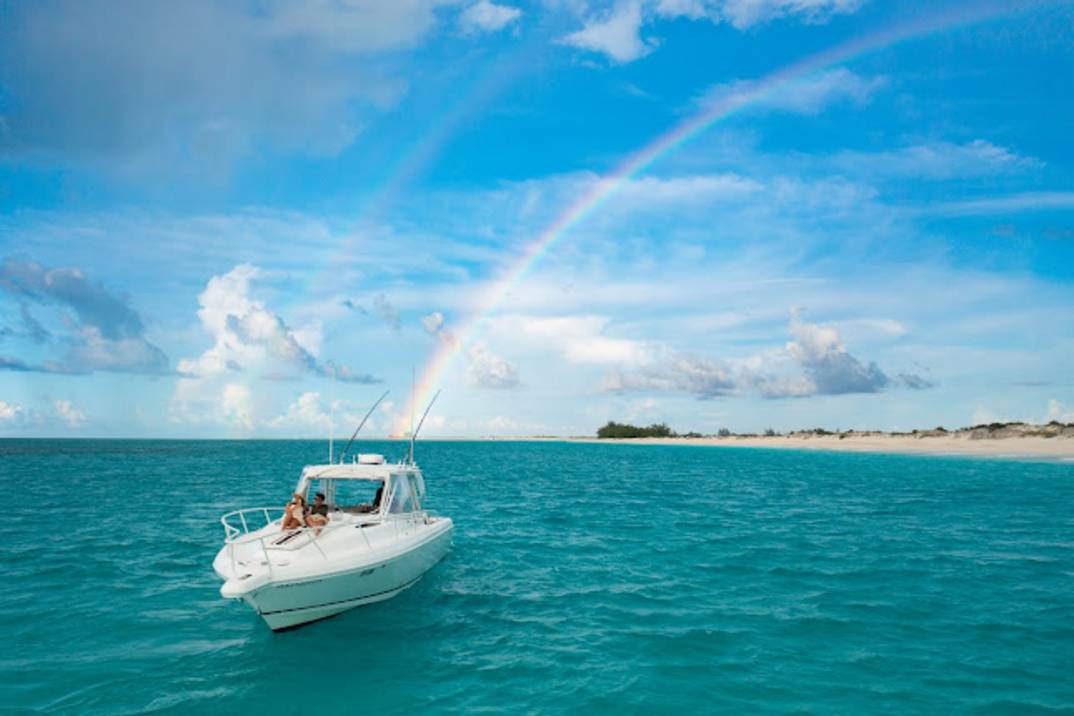
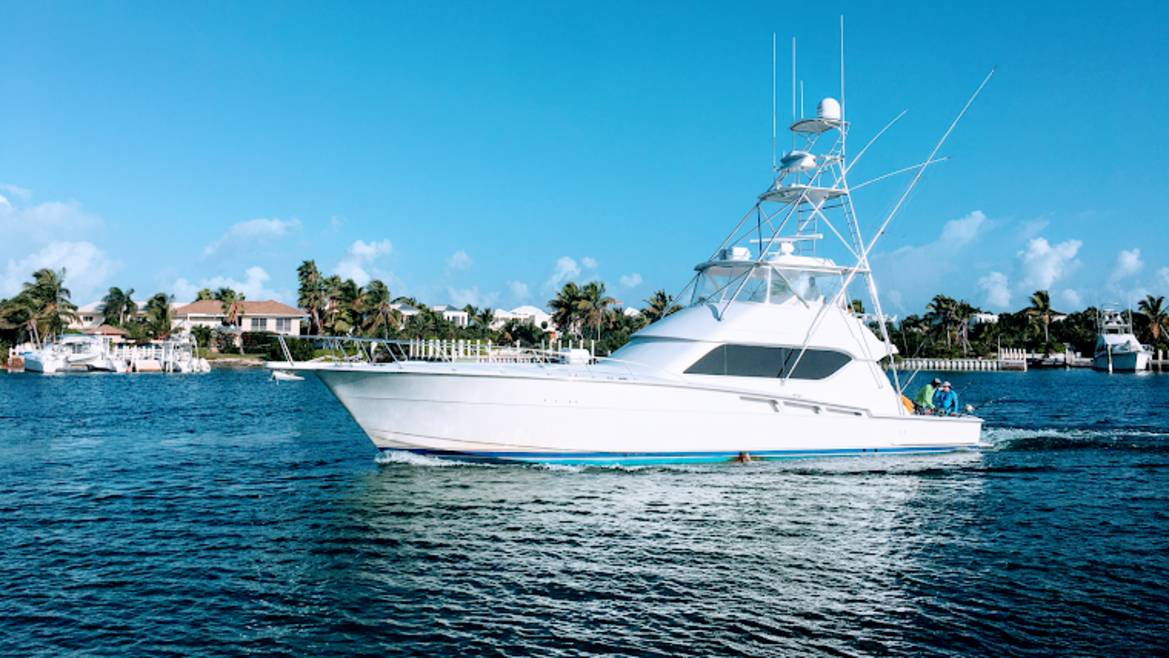
Catchin’ Caicos Sport Fishing Charters & Luxury Tours
If you want a flagship experience, Codne and his crew operate a 60-foot Hatteras with a full cabin, ideal for families and groups who want comfort on the longer offshore runs. They specialize in deep sea sport, bottom fishing, and deep drop fishing into the wall.
- Rating: 4.9 stars (57 reviews)
- Address: Turtle Cove Marina, Providenciales
- Phone: +1 649-244-2927
- Best for: Families and groups who want a luxury yacht experience
- View on Google Maps
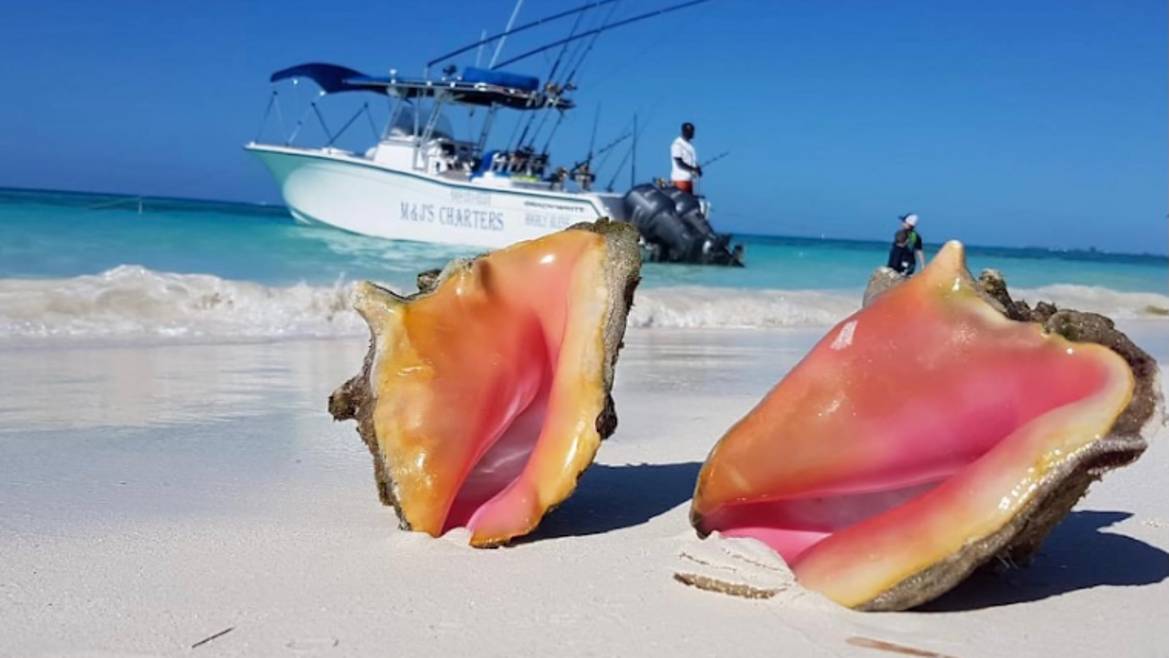
M & J’s Charters
A perfect five-star average across more than a hundred reviews is rare anywhere. Captain AJ and Patrick build their trips around what each group actually wants, whether that is fishing, snorkeling, or a mix of both. The Provo locals call them out specifically for going to spots before the crowds arrive.
- Rating: 5.0 stars (112 reviews)
- Address: Turtle Cove Marina, Providenciales
- Phone: +1 649-245-0550
- Best for: Families with kids and groups who want personalized half or full-day charters
- View on Google Maps
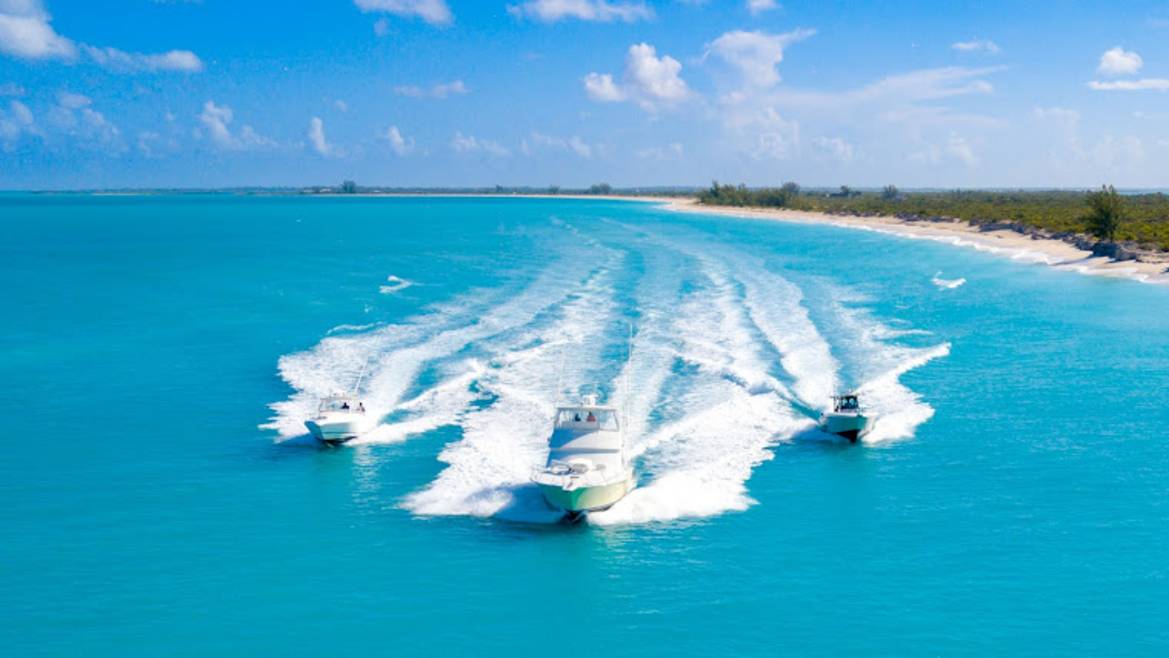
Panoply Sport Fishing & Luxury Charters
Captain Bruce and Jose are the names you will hear if you talk to any serious offshore angler on the island. Panoply leans hard into deep sea sport fishing, with a clean five-star average and a reputation for finding tuna when other boats are coming back light.
- Rating: 5.0 stars (44 reviews)
- Address: Turtle Cove Marina, Suzy Turn Rd, Turtle Cove, Providenciales
- Phone: +1 649-432-3566
- Best for: Anglers focused on deep sea trolling for tuna, mahi, and wahoo
- View on Google Maps
Types of Fishing in Turks and Caicos
The single most important question to answer before you book is what kind of fishing you actually want to do. The four styles below all happen here, and each one has a different boat, technique, and target species.
Deep Sea Sport Fishing
Trolling the wall and the deep blue offshore. Boats run 40 to 60 feet, often with fighting chairs and outriggers, and they pull lines for mahi-mahi, wahoo, yellowfin tuna, blackfin tuna, blue marlin, white marlin, and sailfish. The drop-off is so close to Provo that you are typically on top of fish within fifteen minutes of leaving the dock. This is the trip people picture when they think Caribbean fishing.
Bonefishing on the Flats
The Caicos Banks are world-renowned for bonefish, and bonefish here run a respectable 4 to 11 pounds. The fishing is sight-based, you and your guide pole or wade across crystal flats, looking for shadows. Anglers also routinely encounter Atlantic tarpon, permit, jack crevalle, pompano, and barracuda on the same water. This is technical fishing, and it rewards patience.
Reef and Bottom Fishing
The most family-friendly option. Boats anchor over reef structure and you drop bait on shorter rods for red snapper, mutton snapper, yellowtail snapper, Nassau grouper, jacks, mackerel, and triggerfish. Almost everyone catches something, and most charters will clean and bag your keepers so you can grill them back at the villa.
Deep Drop Fishing
A quieter, more specialized style where you drop heavy weights to depths of 300 to 1,500 feet with multi-hook rigs. Targets are deep-water snapper and several grouper species that you simply cannot catch any other way. Catchin’ Caicos and Grand Slam both run dedicated deep drop trips for serious anglers.
When to Go: Best Seasons for Turks and Caicos Fishing
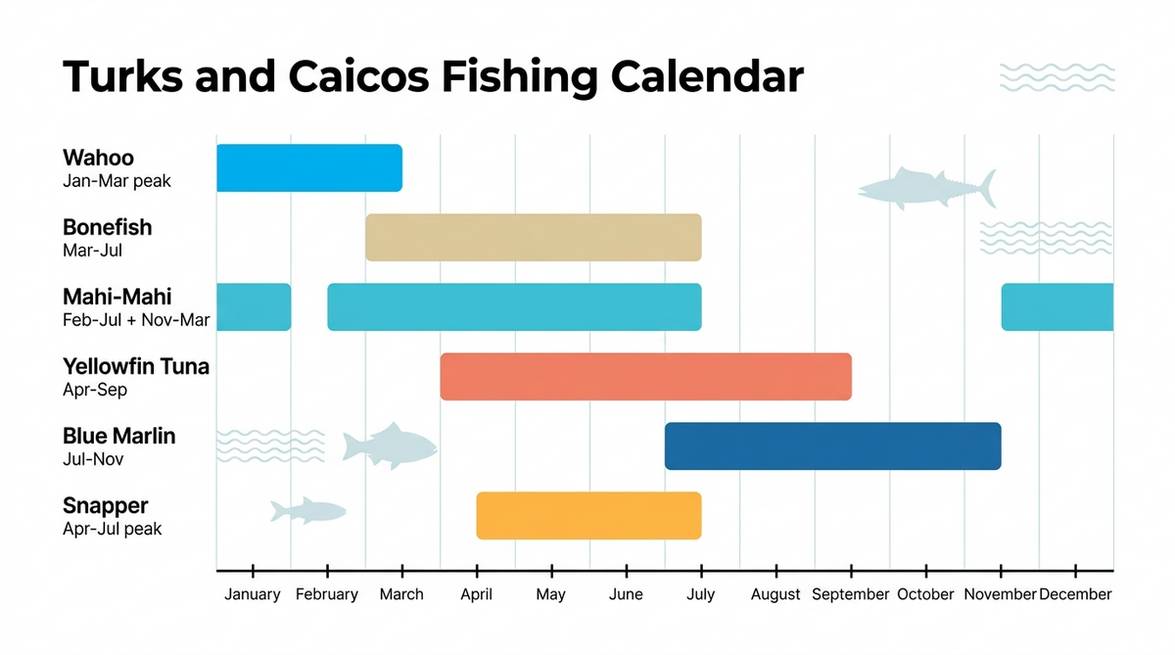
The good news is that something is biting year-round. The better news is that if you have a target species in mind, there are clear windows when your odds are best.
| Season | What’s Running |
| —| — |
| January – March | Wahoo (peak), sailfish, mahi-mahi, blackfin tuna, reef sharks |
| March – July | Bonefishing peak, mahi-mahi, snapper |
| April – September | Blue marlin, white marlin, yellowfin tuna, bigeye tuna |
| July – November | Marlin and billfish (peak) |
| November – March | Wahoo, sailfish, mahi-mahi, winter offshore species |
| Year-round | Mackerel, sharks, tuna, dolphinfish, bonefish, snapper, jacks |
Conch and lobster have their own conservation seasons. Conch is open mid-October to mid-July, and lobster is open mid-August to April. Outside those windows, possession is illegal even if you find them.
Fishing Regulations and Licenses You Need to Know
Turks and Caicos takes its marine resources seriously, and so should you. Charter operators handle most of this for guided trips, but if you are fishing independently the rules are entirely on you.
License Requirements
Every visitor aged 16 and older needs a valid recreational fishing license, including passengers on a boat with fishing gear aboard. Children under 16 are exempt. Three license tiers are available:
- 1-Day License: $10 at government offices, $10 to $15 at marinas (plus 12% tax)
- 30-Day License: $30 at government offices, $30 to $35 at marinas (plus 12% tax)
- Annual License: $60 USD
- Lionfish License: $60 USD per year, separate, and required for spearing lionfish
Daily Catch Limits
A recreational license allows you to keep:
- 10 pounds (4.5 kg) of fish per day, cleaned or filleted
- One trophy fish per day that may exceed the 10-pound limit
- Minimum size of 6 inches (15 cm) for most edible species
- Nassau grouper is permitted only March to November
- Billfish and sharks are catch-and-release only
Prohibited Methods
Spear guns are illegal except for invasive lionfish. Hawaiian slings are not allowed. Using scuba equipment to collect fish, conch, or lobster is prohibited (lionfish hunting with scuba requires a separate license).
Protected Areas
You cannot fish, even catch-and-release, inside national parks and nature reserves. The main no-fishing zones include Princess Alexandra National Park off the north coast of Providenciales, Columbus Landfall National Park at Grand Turk, Admiral Cockburn Land and Sea National Park at South Caicos, and the Ramsar Nature Reserve spanning North and Middle Caicos.
Penalties for fishing without a license are steep: fines up to $50,000 USD and up to 12 months imprisonment.
Best Locations for Fishing in Turks and Caicos
- Caicos Banks are the heart of the bonefishing scene. Vast shallow flats with mangroves and turtle grass, accessible from Provo, North Caicos, South Caicos, and Pine Cay.
- Off Providenciales’ north shore, the marine shelf drops within fifteen minutes of the dock, putting you on tuna, mahi, and wahoo grounds without a long offshore run.
- Grand Turk offers excellent sport, bottom, and bonefishing within a day’s reach, particularly worthwhile if you are already on a cruise stop.
- South Caicos and Salt Cay are quieter, more remote bases with productive flats and reefs nearby for visitors who want fewer crowds.
Ready to Cast a Line in Turks and Caicos?
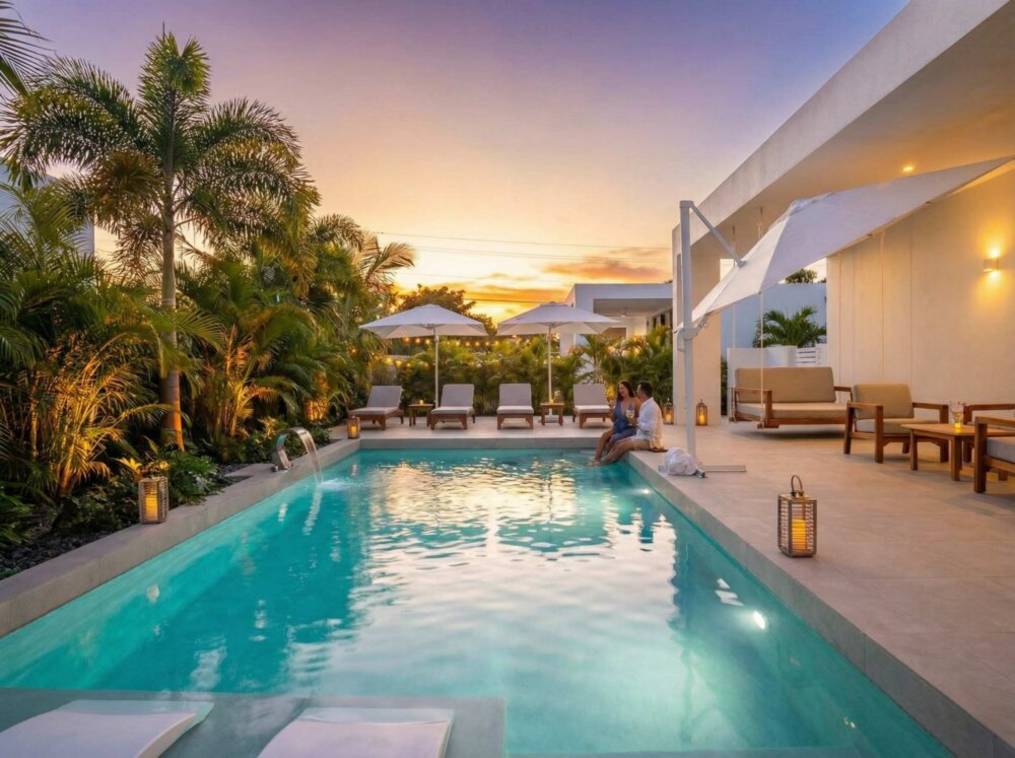
The combination of accessible deep blue, miles of bonefish flats, and crews who have been running these waters for decades makes Turks and Caicos fishing genuinely special. Book the charter that fits your group, get your license sorted, and pick a base on Long Bay Beach where you can come home, grill your catch, and watch the sun drop over the water.
If you would like our reservations team to help you pair a villa with a recommended captain, browse our Long Bay Beach villas or reach out directly. We will make sure your fishing days slot cleanly into the rest of your trip.
Frequently Asked Questions About Turks and Caicos Fishing
Does Turks and Caicos have good fishing?
Yes. The islands sit on a marine shelf where shallow flats meet a deep-water drop-off, and that geography produces excellent deep-sea, bonefishing, and reef fishing in the same waters. Charter captains regularly land yellowfin and blackfin tuna, mahi-mahi, wahoo, and trophy bonefish in the 4 to 11 pound range. The reefs are also teeming with snapper and grouper.
Can you fish from shore in Turks and Caicos?
Yes, shore and DIY fishing is legal with a valid license, but you cannot fish from beaches inside national parks, including Princess Alexandra on Providenciales’ north shore. Productive shore spots tend to be along the rocky points outside the parks. Most serious anglers still go with a guide because the bonefish flats are best accessed by skiff or wading with a poling guide.
How much is a fishing license in Turks and Caicos?
A 1-Day license is $10 at government offices and $10 to $15 at marinas plus 12% tax. A 30-Day license is $30. An annual license is $60 USD. A separate lionfish hunting license is $60 USD per year. Charter operators usually include the license cost in the trip price; confirm this with your captain when you book.
What month is best for offshore fishing in Turks and Caicos?
For trophy billfish (blue marlin, white marlin, sailfish), July through November is peak. For yellowfin tuna and bigeye tuna, April through September is the strongest window. Wahoo runs hot January through March. If you want a near-guarantee of action across multiple species, late spring (April to June) is hard to beat.
Do I need to bring my own gear for a fishing charter?
No. Reputable charters in Turks and Caicos provide all rods, reels, tackle, bait, and safety gear. Most also include the fishing license, refreshments, and lunch on three-quarter and full-day trips. Anglers who prefer their own setup, particularly fly fishers chasing bonefish, are welcome to bring tackle.
Can you keep what you catch?
Yes, within the daily catch limits: 10 pounds of fish per day plus one trophy fish, with a 6-inch minimum size on most species. Nassau grouper can only be kept March through November. Billfish and sharks must be released. Many charters will clean and bag your keepers, and several will arrange a beach BBQ to grill your catch the same day.